
Blog
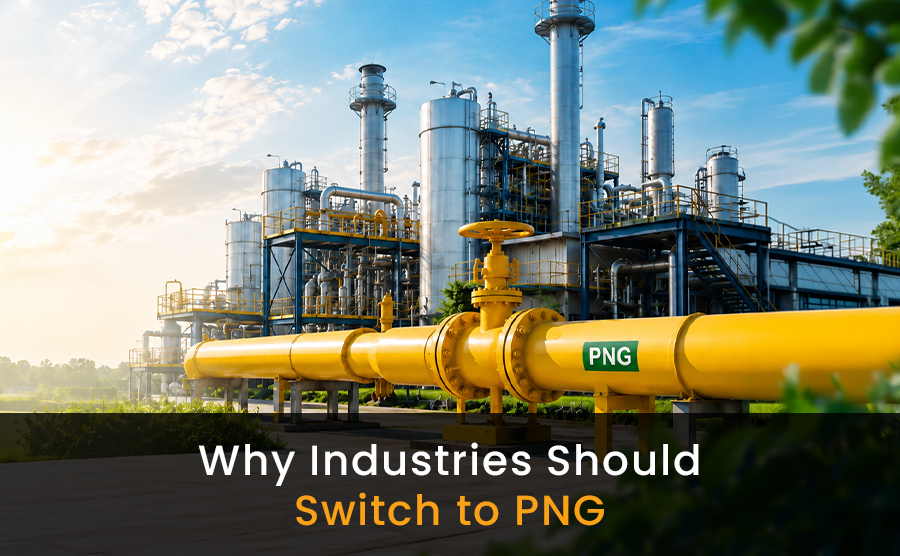
Why Industries Should Switch to PNG
Introduction
Industries today are constantly working under pressure to control rising energy costs, improve efficiency, and meet stricter environmental standards. With fuel prices increasing and sustainability becoming a priority, many businesses are now exploring cleaner and more stable alternatives to traditional fuels like diesel, coal, and LPG.
In this changing scenario, industrial PNG gas is emerging as a practical and dependable solution. It offers a cleaner, safer, and more efficient way to power industrial operations while helping businesses manage long-term costs more effectively.
In this blog on why industries should switch to PNG, we will understand how PNG works, what makes it beneficial for industrial use, and why it is becoming a preferred energy choice across sectors in India.
Next, let us begin by understanding what PNG is and how it actually works in industrial applications.
What Is PNG and How Industries Use It
Piped Natural Gas, commonly known as PNG, is a clean and efficient fuel that is supplied directly to industrial units through an underground pipeline network. This eliminates the need for fuel storage tanks, transportation arrangements, and manual handling of fuel, making operations much simpler and safer.
In industrial applications, PNG for industries is delivered continuously to support equipment such as boilers, furnaces, and heating systems. This ensures smooth and uninterrupted production without frequent fuel supply interruptions. Compared to diesel or LPG, PNG provides a more stable and controlled energy source, which is especially important for large-scale manufacturing and processing environments.
Its consistent supply and cleaner combustion make it a practical choice for industries aiming to improve efficiency while reducing operational challenges and dependency on traditional fuel logistics.
Key Benefits of PNG for Industrial Use
Industries are increasingly looking for fuel solutions that are cost-effective, reliable, and environmentally responsible. In this context, PNG for industries has emerged as a strong alternative to conventional fuels like diesel, coal, and LPG. It not only improves operational efficiency but also supports long-term sustainability goals. Below are the key benefits that explain why many businesses are shifting toward industrial PNG gas.
1. Cost Efficiency and Long-Term Savings
One of the most important advantages of PNG is its cost-effectiveness. When comparing PNG vs diesel industries, PNG consistently proves to be more economical over time. It reduces several hidden costs that come with traditional fuels, such as storage, transportation, and frequent procurement.
Industries benefit in multiple ways:
- Lower fuel cost compared to diesel and LPG
- Reduced logistics and handling expenses
- More stable and predictable energy pricing
- No requirement for fuel storage tanks or refilling systems
Since PNG is supplied directly through pipelines, businesses can avoid fuel transport delays and price fluctuations. This leads to better financial planning and makes industrial fuel cost savings PNG a major reason for its growing adoption in manufacturing and processing sectors.
2. Environmental Benefits and Cleaner Operations
PNG is a significantly cleaner fuel compared to coal, diesel, and LPG. It produces fewer harmful emissions during combustion, which helps reduce the environmental impact of industrial operations.
Key environmental advantages include:
- Lower carbon emissions during fuel usage
- Reduced air pollution in industrial areas
- Cleaner and more efficient combustion process
- Easier compliance with environmental regulations
As industries focus more on sustainability, clean energy for industries India is increasingly linked with PNG adoption. It allows companies to maintain productivity while actively reducing their carbon footprint and supporting cleaner industrial growth.
3. Operational Efficiency and Reliability
One of the strongest advantages of PNG is its uninterrupted supply system. Since it is delivered through pipelines, industries do not depend on fuel transport schedules or storage availability.
Key operational benefits include:
- Continuous and reliable fuel supply without interruptions
- Reduced dependency on fuel transportation and logistics
- Better monitoring and control of energy usage
- Simplified fuel management processes
These advantages make industrial gas solutions PNG a preferred choice for industries that require stable and continuous energy for their daily operations. It helps reduce downtime and improves overall productivity.
4. Safety and Handling Advantages
Safety plays a critical role in industrial environments, and PNG offers clear advantages in this area. Since it is transported through pipelines, risks related to fuel storage, handling, and transportation are significantly reduced.
PNG is also lighter than air, which means that in the rare case of a leakage, it disperses quickly instead of accumulating. This reduces the chances of fire hazards and makes it a safer option compared to many conventional fuels used in industries.
For businesses handling large-scale operations, this adds an extra layer of confidence in adopting industrial PNG gas as a reliable energy source.
These combined benefits show why PNG for industries is becoming a preferred energy solution. Next, let us understand which industries benefit the most from adopting PNG and how it fits into different industrial applications.
How PNG Supports Industrial Operations
PNG is widely used across different industrial operations where a steady and reliable energy source is required. It is commonly used in heating systems, boilers, furnaces, and various manufacturing processes that depend on a continuous fuel supply for smooth functioning.
For many businesses, piped natural gas helps simplify operations by removing the need for manual fuel handling, storage, and frequent refilling. This not only reduces operational effort but also improves overall workflow efficiency.
By providing a stable and uninterrupted energy output, PNG supports better production consistency and helps industries maintain smooth day-to-day operations without unnecessary disruptions or delays.
Challenges Industries Face While Switching to PNG
Switching to PNG offers many advantages for industries, but the transition may also come with certain challenges. Understanding these concerns in advance can help businesses prepare better and make a smoother shift toward industrial PNG gas.
- Infrastructure availability: In some regions, pipeline networks are still expanding, which means certain industrial areas may not yet have direct access to PNG for industries. This can delay adoption until the required infrastructure becomes available.
- Initial setup and connection costs: Installing a PNG connection may require upfront investment for pipelines, fittings, and system adjustments. For some industries, these initial costs can be an important consideration before switching.
- Transition from existing fuel systems: Industries currently using diesel, coal, or LPG may need equipment modifications and operational adjustments to support PNG usage effectively.
- Dependence on regional pipeline expansion: Businesses located in developing industrial zones may need to wait for future pipeline network expansion before fully adopting PNG.
Although these challenges exist, continuous infrastructure development and increasing industry adoption are gradually making PNG more accessible and practical across India.
Industries That Benefit Most from PNG
Many industries depend on continuous and reliable energy to maintain smooth operations. This is where PNG for industries becomes highly beneficial, especially for sectors that require stable heating and uninterrupted fuel supply throughout the day.
Manufacturing Industries
Factories and production units that require continuous heat and energy for machinery and processing can benefit from the stable supply of PNG.
Food Processing Units
Food industries often require clean combustion for cooking, heating, and processing applications. PNG supports cleaner and more controlled operations.
Textile Industries
Textile units using boilers, steam systems, and heating equipment can improve operational efficiency with a reliable PNG supply.
Chemical and Processing Plants
Industries involved in chemical processing need consistent energy for controlled production environments, making PNG a practical option.
Large-Scale Heating Applications
Industrial facilities requiring continuous heating and thermal energy can benefit from the uninterrupted fuel supply offered by piped natural gas for industries.
For these sectors, PNG helps improve efficiency, reduce operational challenges, and support long-term cost savings.
How Government Policies Support PNG Adoption
India is actively encouraging the use of cleaner and more sustainable fuel alternatives across industrial sectors. As part of the country’s broader energy transition efforts, PNG for industries is receiving strong support through infrastructure development and long-term environmental initiatives. This focus is helping industries move toward cleaner and more efficient operations.
Industries adopting PNG benefit from several supportive developments:
- Expansion of pipeline infrastructure: Continuous growth of pipeline networks is improving PNG accessibility across industrial regions.
- Support for cleaner energy transition: Government initiatives are encouraging industries to shift toward cleaner fuels to reduce pollution and improve sustainability.
- Focus on long-term environmental goals: PNG adoption supports industrial compliance with environmental standards and future sustainability targets.
These efforts continue to strengthen the overall benefits of PNG in industries and support the transition toward cleaner industrial growth in India.
Future of PNG for Industrial Applications
The future of PNG in India’s industrial sector looks strong. With continuous pipeline expansion and increasing focus on clean energy, more industries are expected to adopt PNG in the coming years.
As businesses prioritize efficiency and sustainability, industrial PNG gas will continue to play a major role in shaping industrial energy consumption. It is becoming a key part of India’s transition toward cleaner and more reliable fuel systems.
How to Decide if PNG Is Right for Your Industry
Before switching to PNG, industries should carefully evaluate their energy needs, infrastructure availability, and long-term operational goals. Understanding fuel consumption patterns and future expansion plans can help businesses make a more practical and cost-effective decision.
PNG for industries is a strong option for businesses looking for:
- Lower and more stable fuel costs
- Cleaner and safer energy usage
- Reliable and uninterrupted fuel supply
- Better long-term operational efficiency
As industries continue focusing on sustainability and cost control, the shift toward industrial PNG gas is becoming more practical and beneficial. Understanding why industries are switching to PNG gas helps businesses make informed decisions that support both financial growth and environmental responsibility.
Conclusion
Industries today require energy solutions that are reliable, cost-effective, and environmentally responsible. In this changing industrial landscape, PNG for industries is emerging as a practical alternative to traditional fuels like diesel, coal, and LPG.
From lowering operational expenses to improving safety and supporting cleaner industrial processes, the advantages of piped natural gas for industries are becoming increasingly clear. Although infrastructure limitations still exist in some regions, continuous pipeline expansion and growing government support are making PNG more accessible across India.
For many businesses, understanding why industries should switch to PNG is no longer just about exploring an alternative fuel option. It is becoming an important step toward achieving long-term efficiency, sustainability, and operational stability.