
Blog
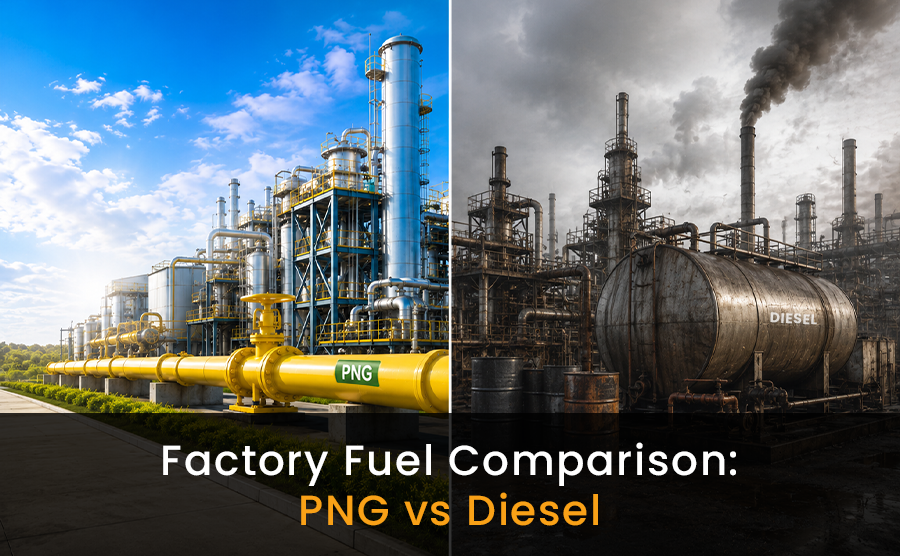
Factory Fuel Comparison: PNG vs Diesel
Choosing the right fuel is becoming increasingly important for factories aiming to control operational costs, improve efficiency, and support long-term sustainability. Industries that depend on continuous energy supply need fuel systems that are reliable, cost-effective, and easy to manage. This is why many businesses are now comparing traditional diesel with cleaner alternatives like industrial PNG gas.
The discussion around PNG vs diesel for factories is growing because both fuels offer different operational advantages. While diesel has supported industries for years, rising fuel costs and handling challenges are encouraging factories to explore PNG as a cleaner and more efficient option.
In this blog, we will explore the complete factory fuel comparison PNG vs diesel, including cost, performance, safety, environmental impact, and long-term operational benefits.
How PNG and Diesel Are Used in Industries
Piped Natural Gas, commonly known as PNG, is a clean fuel supplied directly to factories through underground pipelines. It removes the need for fuel storage, transportation, and manual handling, making industrial operations more convenient and streamlined.
Diesel, on the other hand, is a liquid fuel that requires transportation, storage tanks, and regular refilling. It has been a traditional fuel choice for factories because of its easy availability and ability to support heavy industrial applications.
Both fuels are commonly used in boilers, furnaces, generators, and heating systems. However, the way they are supplied, handled, and consumed creates major differences in cost, efficiency, and long-term operations.
Comparing PNG and Diesel for Factory Use
Choosing between PNG and diesel is an important decision for factories that depend on continuous energy for daily operations. Both fuels are widely used in industrial environments, but they differ significantly in terms of cost, efficiency, safety, maintenance, and long-term operational impact. Understanding this factory fuel comparison PNG vs diesel can help industries select the fuel option that aligns better with their production requirements and business goals.
1. Cost Comparison Between PNG and Diesel
Fuel cost is one of the biggest concerns for factories because it directly affects operational expenses and long-term profitability. While both PNG and diesel are used for industrial energy needs, the overall cost structure of each fuel is very different.
Diesel Cost Factors
Diesel prices are often influenced by transportation costs, fuel demand, market fluctuations, and storage requirements. Factories using diesel also need storage tanks, fuel transportation arrangements, and regular refilling, which can increase operational expenses over time.
For industries with high energy consumption, these changing fuel costs can make budgeting difficult and reduce cost predictability.
PNG Cost Advantages
In the PNG vs diesel cost comparison, PNG generally offers more stable and manageable long-term fuel expenses. Since PNG is supplied directly through pipelines, industries can avoid costs related to transportation, storage, and manual fuel handling.
Although the initial PNG connection setup may require investment, many factories recover these costs through long-term factory fuel cost savings and lower operational expenses.
2. Efficiency and Performance Comparison
Industrial operations require fuel systems that can support continuous production without interruptions. Both PNG and diesel can handle industrial applications, but their efficiency differs depending on operational requirements.
Diesel Performance in Factories
Diesel delivers strong energy output and is commonly used in heavy industrial equipment, generators, and backup systems. It performs effectively in industries where high-power energy support is needed for demanding operations.
This is one reason diesel continues to remain important in several industrial sectors.
PNG Performance Benefits
PNG offers a continuous and stable fuel supply through pipelines, which helps improve operational efficiency in factories that run continuously. Its cleaner combustion process also supports smoother equipment performance and reduces fuel-related residue buildup.
In many industrial PNG gas vs diesel comparisons, PNG performs better for factories focused on uninterrupted operations and long-term efficiency.
3. Environmental Impact Comparison
Industrial operations require fuel systems that can support continuous production without interruptions. Both PNG and diesel can handle industrial applications, but their efficiency differs depending on operational requirements.
Diesel Performance in Factories
Diesel delivers strong energy output and is commonly used in heavy industrial equipment, generators, and backup systems. It performs effectively in industries where high-power energy support is needed for demanding operations.
This is one reason diesel continues to remain important in several industrial sectors.
PNG Performance Benefits
PNG offers a continuous and stable fuel supply through pipelines, which helps improve operational efficiency in factories that run continuously. Its cleaner combustion process also supports smoother equipment performance and reduces fuel-related residue buildup.
In many industrial PNG gas vs diesel comparisons, PNG performs better for factories focused on uninterrupted operations and long-term efficiency.
4. Safety and Handling Comparison
Fuel handling and storage safety are critical concerns in industrial environments. The way fuel is stored, transported, and managed can directly affect workplace safety and operational reliability.
Diesel Handling Challenges
Diesel requires on-site storage tanks, transportation management, and manual handling processes. These requirements can increase operational risks, especially in large factories where fuel movement happens regularly.
Storage maintenance and spill management also add to operational responsibilities.
PNG Safety Advantages
PNG is supplied directly through underground pipelines, reducing the need for fuel storage and transportation inside factory premises. This simplifies fuel management and reduces several handling-related risks.
Natural gas is also lighter than air, which allows it to disperse quickly if leakage occurs. This makes PNG a safer and more manageable fuel option for many industrial environments.
5. Maintenance and Operational Requirements
Diesel Maintenance Requirements
Diesel-powered systems often require regular servicing because combustion residue can affect equipment performance over time. Storage tanks, fuel filters, and transportation systems also need routine inspections and maintenance to ensure smooth operations.
PNG Operational Simplicity
PNG systems usually involve simpler fuel management because the supply is continuous and directly connected through pipelines. Cleaner combustion also helps reduce equipment wear and maintenance frequency in many industrial applications.
Factories aiming to reduce downtime and improve operational efficiency often find PNG easier to manage in the long run.
6. Supply and Availability Comparison
Maintenance requirements can significantly affect industrial productivity and long-term operating costs. Fuel systems that require frequent servicing may increase downtime and operational complexity.
Diesel Maintenance Requirements
Diesel-powered systems often require regular maintenance due to residue buildup and fuel handling processes. Fuel tanks, filters, and transportation systems also need routine inspection and servicing.
Over time, these maintenance needs can increase operational effort and expenses.
PNG Operational Simplicity
PNG systems generally involve simpler fuel management because the supply is continuous and directly connected through pipelines. Cleaner combustion also helps reduce equipment wear in many industrial applications.
Factories looking to improve operational efficiency and reduce downtime often find PNG easier to manage in the long run.
Key Advantages of Using PNG for Factory Operations
Factories switching to industrial PNG gas often experience benefits that go far beyond basic fuel savings. As industries focus more on operational efficiency, safety, and sustainability, PNG is becoming a preferred fuel option for modern industrial environments. Its pipeline-based supply system and cleaner combustion process help factories simplify fuel management while improving overall performance.
Some of the key advantages of PNG for factories include:
- Lower long-term operational and fuel expenses
- Cleaner combustion with reduced emissions
- Continuous and uninterrupted fuel supply through pipelines
- Reduced dependency on fuel storage and transportation
- Safer handling compared to many liquid fuels
- Better support for sustainability and environmental goals
These benefits help factories improve operational stability while reducing fuel-related challenges. For industries looking to balance efficiency, cost control, and cleaner operations, PNG is becoming a strong long-term industrial energy solution.
Situations Where Diesel Continues to Support Industries
Even though many industries are moving toward industrial PNG gas, diesel continues to play an important role in certain factory operations. In some situations, diesel remains the more practical or immediately available option depending on infrastructure, operational needs, and equipment requirements.
Some common situations where factories may still rely on diesel include:
- Areas without PNG pipeline access: Factories located in regions where PNG infrastructure is still developing may continue depending on diesel for regular industrial operations.
- Backup fuel requirements: Many industries use diesel as an emergency backup fuel to maintain operations during power interruptions or fuel supply issues.
- Temporary industrial setups: Construction sites, temporary manufacturing units, and mobile industrial operations may prefer diesel where permanent PNG connectivity is not practical.
- Heavy industrial equipment compatibility: Certain industrial systems and older machinery may still operate more effectively on diesel based on their existing setup and energy requirements.
While PNG adoption is growing steadily, diesel continues to remain relevant in industries where operational flexibility and infrastructure limitations are important considerations.
Choosing the Right Fuel for Different Factory Types
Different industries have different energy requirements, so the right fuel choice depends on operational needs.
Manufacturing units with continuous production systems often benefit from PNG because of its stable and uninterrupted supply. Food processing industries may prefer PNG for its cleaner combustion and controlled heating applications.
Textile and chemical industries using boilers and steam systems can also improve operational efficiency through PNG usage. Smaller factories may initially choose diesel because of infrastructure limitations, while larger factories often benefit more from long-term PNG adoption.
Future of Industrial Fuel Choices in India
India’s industrial sector is gradually moving toward cleaner and more sustainable fuel solutions. With increasing environmental awareness and infrastructure expansion, PNG adoption is expected to grow steadily in the coming years.
At the same time, diesel may continue to play a role in sectors where pipeline access remains limited. However, the long-term trend clearly shows industries shifting toward cleaner industrial fuel alternatives that improve efficiency while reducing environmental impact.
Future of PNG for Industrial Applications
The future of PNG in India’s industrial sector looks strong. With continuous pipeline expansion and increasing focus on clean energy, more industries are expected to adopt PNG in the coming years.
As businesses prioritize efficiency and sustainability, industrial PNG gas will continue to play a major role in shaping industrial energy consumption. It is becoming a key part of India’s transition toward cleaner and more reliable fuel systems.
Choosing the Best Fuel for Factory Operations
Before choosing between PNG and diesel, factories should evaluate several important factors, including fuel costs, infrastructure availability, operational requirements, and long-term business goals.
Factories looking for lower fuel expenses, cleaner operations, and uninterrupted supply may find PNG to be the better long-term solution. On the other hand, businesses operating in areas without pipeline access may still depend on diesel for practical reasons.
Understanding the complete factory fuel comparison PNG vs diesel helps businesses make decisions that align with both operational efficiency and future sustainability goals.
Conclusion
The discussion around PNG vs diesel for factories is becoming increasingly important as industries look for more efficient and sustainable fuel solutions. While diesel continues to serve many industrial operations, PNG is emerging as a cleaner, safer, and more cost-effective alternative for long-term use.
From reducing operational costs to improving safety and supporting cleaner industrial processes, PNG offers several advantages that align with the future of industrial energy use in India.
For factories planning long-term growth and efficiency, choosing the right fuel is no longer only about immediate availability. It is about building a more reliable, cost-effective, and sustainable industrial operation for the future.