
Blog
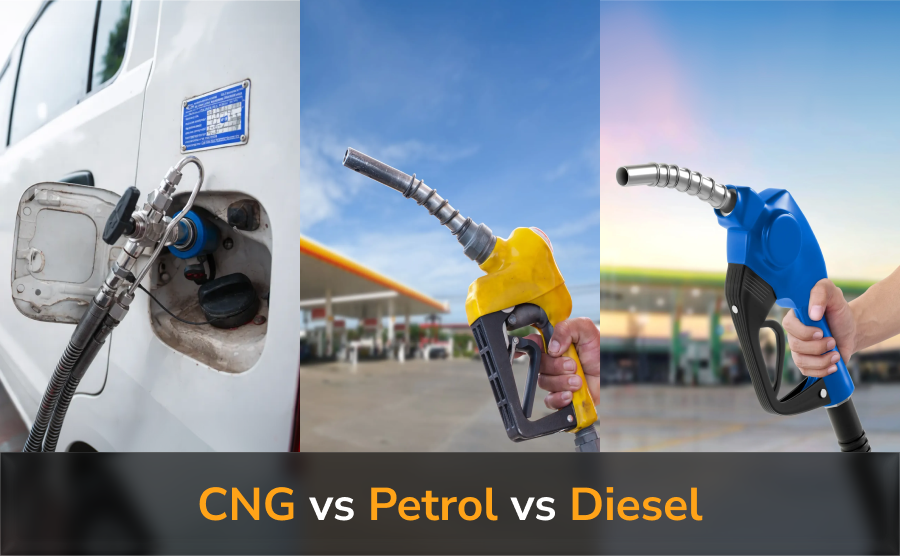
CNG vs Petrol vs Diesel: Cost, Mileage & Emissions Comparison
Introduction
Understanding the different fuel types is essential before comparing CNG, petrol, and diesel. Each fuel has unique characteristics, uses, and performance factors that influence cost, mileage, and emissions.
CNG, or Compressed Natural Gas, is primarily methane stored under high pressure. It is widely used in urban vehicles, taxis, buses, and commercial fleets because it burns cleanly, produces lower emissions, and offers good fuel efficiency in India.
Petrol is a liquid fuel refined from crude oil. It powers most private cars in India and delivers smooth acceleration, but petrol engines emit higher levels of carbon dioxide and nitrogen oxides compared to CNG.
Diesel is another liquid fossil fuel, preferred for heavy vehicles, commercial transport, and long-distance driving due to its high energy density. Diesel engines produce higher torque but also emit more particulate matter and nitrogen oxides.
This blog explains the basics of each fuel to help you understand their cost, mileage, and emission differences in urban and long-distance use.
Understanding CNG, Petrol, and Diesel
Understanding the different fuel types is important when comparing CNG vs petrol vs diesel. Each fuel has unique features, costs, mileage, and emissions that affect daily driving, commercial use, and long-distance travel. Here is a clear breakdown.
CNG (Compressed Natural Gas)
CNG is mostly methane stored under high pressure in cylinders. It is widely used in cars, auto-rickshaws, buses, and commercial fleets in Indian cities. CNG burns cleaner than petrol and diesel, producing fewer particulate matter and nitrogen oxides, which helps improve urban air quality. It is supplied through dedicated filling stations and city gas networks, making it a practical and cost-effective fuel for daily commuting and fleet operations.
Petrol
Petrol is a liquid fuel refined from crude oil and powers most private cars in India. Petrol engines provide smooth acceleration and high power, which is ideal for city driving. However, petrol combustion emits higher carbon monoxide and nitrogen oxides compared to CNG, contributing to urban air pollution.
Diesel
Diesel is another liquid fossil fuel commonly used in heavy vehicles, buses, and high-mileage cars. Diesel engines are fuel-efficient over long distances and provide durability. However, they emit more particulate matter and nitrogen oxides than CNG, affecting city air quality. Diesel is preferred for trucks, commercial fleets, and vehicles requiring long engine life.
Understanding these differences helps vehicle owners and fleet operators make informed choices based on fuel cost, mileage, and emissions.
Cost Difference Between CNG, Petrol, and Diesel
Understanding the CNG vehicle cost versus petrol and diesel is critical for both personal and commercial use. While each fuel has its advantages, the running cost in India can significantly influence the choice.
- CNG: The upfront cost of a CNG vehicle or a conversion kit is slightly higher than a petrol car. However, CNG mileage in India translates to lower fuel expenses. CNG costs around 50–60% less per kilometre than petrol, making it ideal for daily commuters and commercial fleets like taxis and autos. Over time, the initial investment is offset by significant savings.
- Petrol: Petrol vehicles have lower upfront costs compared to CNG and diesel. The fuel price per litre is higher, and the cost per km increases for city drivers due to traffic congestion. Petrol vehicles are preferred for short trips and personal cars due to their smooth performance.
- Diesel: Diesel vehicles have higher upfront costs due to engine design and fuel injection systems. Diesel is more fuel-efficient than petrol for long-distance travel. For high-mileage drivers or commercial fleets, the diesel vehicle cost per km is lower than petrol but higher than CNG, making CNG the most economical choice for city commuting.
By comparing costs for city drivers and fleet operators, CNG emerges as a more cost-effective urban fuel, while petrol and diesel remain practical for long-distance travel or areas with limited CNG infrastructure.
Which Fuel Gives Better Mileage in India
Mileage plays a major role when comparing CNG vs petrol vs diesel, especially for daily commuters and commercial drivers in India. Higher fuel efficiency means lower running costs and better long-term savings.
CNG mileage in India is generally very competitive. Most CNG cars deliver around 18 to 25 km per kg, depending on engine size, traffic conditions, and driving style. Auto rickshaws and taxis running on CNG often achieve slightly higher mileage because their engines are optimised for city use and lighter loads. This makes CNG a cost-effective choice for urban travel.
On the other hand, petrol mileage in India usually ranges between 12 to 18 km per litre for cars in city driving conditions. Stop-and-go traffic, frequent idling, and congestion reduce fuel efficiency. As a result, petrol vehicles consume more fuel in daily urban use compared to CNG.
Meanwhile, diesel mileage in India is higher than petrol for most vehicles. Diesel cars typically deliver 15 to 22 km per litre, and heavy vehicles offer even better efficiency. Highway driving improves diesel mileage further due to better torque and steady speeds.
Overall, city conditions make CNG mileage more economical than petrol or diesel, while diesel still performs better for long-distance travel.
How Clean Is CNG Compared to Petrol and Diesel?
Reducing urban pollution is one of the main reasons people compare CNG vs petrol vs diesel. Emissions from vehicles directly affect city air quality and public health.
CNG emissions
CNG has one of the lowest emission levels among conventional fuels. It produces almost zero particulate matter and much lower nitrogen oxides compared to petrol and diesel. Carbon monoxide emissions are also reduced. Because CNG burns cleanly, greenhouse gas emissions per kilometre are lower. This helps improve city air quality and reduces respiratory illnesses.
Petrol emissions
Petrol produces moderate levels of carbon monoxide and nitrogen oxides. It also releases some particulate matter. Petrol CO2 emissions are higher than CNG, which increases its impact on urban pollution. While petrol is cleaner than diesel, it still contributes to smog in busy cities.
Diesel emissions
Diesel emits high particulate matter, soot, and elevated nitrogen oxides. It is a major cause of smog and respiratory problems in Indian cities.
For urban transport, CNG remains the cleanest fuel choice for reducing emissions and health risks.
What Are the Pros and Cons of CNG, Petrol, and Diesel?
Choosing between CNG, petrol, and diesel depends on cost, mileage, emissions, and daily usage needs. Each fuel offers clear benefits but also comes with practical limitations.
CNG
- Advantages: CNG has a much lower cost per kilometre, making it ideal for daily commuting and commercial fleets. It burns cleaner than petrol and diesel, producing fewer emissions and helping reduce urban pollution. CNG engines run quieter and create fewer carbon deposits, which lowers maintenance costs and improves long-term engine health.
- Disadvantages: CNG vehicles have a slightly higher upfront cost due to factory-fitted systems or conversion kits. Availability is still limited in smaller towns. Refueling time is longer than petrol or diesel, which can be inconvenient during peak hours.
Petrol
- Advantages: Petrol vehicles are widely available and easy to refuel anywhere in India. They offer smooth engine performance and good acceleration. The upfront vehicle cost is lower, making petrol cars popular for personal use.
- Disadvantages: Petrol has a higher fuel cost per km. Petrol emissions contribute to urban air pollution, and mileage drops in heavy city traffic.
Diesel
- Advantages: Diesel offers the best mileage for long-distance travel. It suits heavy vehicles and high-mileage users. The diesel cost per km is lower than petrol on highways.
- Disadvantages: Diesel emissions include high particulate matter and nitrogen oxides. Diesel vehicles cost more upfront and require higher maintenance.
By carefully weighing these advantages and disadvantages, vehicle owners and fleet operators can choose the fuel that best fits their urban or long-distance travel needs while balancing cost, efficiency, and environmental impact.
Choosing the Best Fuel for Your Vehicle
Selecting between CNG, petrol, and diesel depends on how you use your vehicle and your priorities. For city commuting and daily travel, CNG is the most cost-effective option. It delivers lower fuel costs, good mileage, and produces fewer emissions, making it ideal for taxis, auto-rickshaws, and private urban vehicles.
For short trips and smooth driving, petrol is a convenient choice. It is widely available, offers good engine performance, and suits personal cars with lower mileage requirements.
For long-distance travel or heavy-duty vehicles, diesel provides better fuel efficiency, higher torque, and durability. It is preferred for trucks, buses, and commercial fleets.
By considering cost, mileage, and emissions together, vehicle owners can make informed choices that support both economic savings and cleaner urban transport.
Conclusion
Comparing CNG vs petrol vs diesel in India highlights the growing relevance of cleaner fuels in urban areas. CNG stands out for its lower emissions, cost-effectiveness, and positive impact on city air quality. Petrol remains a convenient choice for personal cars, while diesel is suited for long-distance travel and high-mileage vehicles.
As Indian cities face rising fuel costs and increasing pollution, adopting CNG in public transport, taxis, and private vehicles can contribute significantly to cleaner air and reduced greenhouse gas emissions. Infrastructure expansion, wider availability, and policy support are helping make CNG a practical choice for urban commuters.
For cities, businesses, and fleet operators looking to balance cost, efficiency, and environmental responsibility, CNG offers a sustainable and smarter fuel option for today and the future.