
Blog
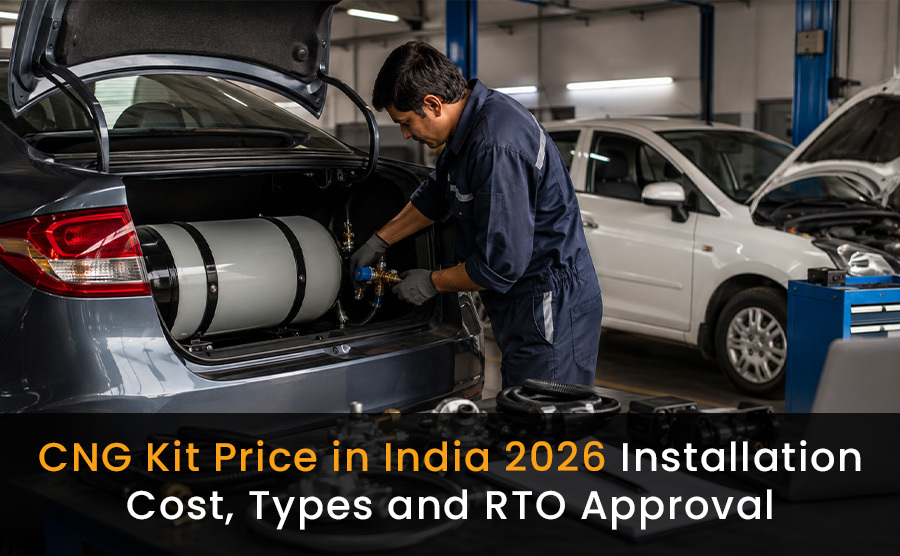
CNG Kit Price in India 2026: Installation Cost, Types and RTO Approval
CNG has become a popular choice for vehicle owners looking to manage fuel expenses while switching to a cleaner alternative to petrol or diesel. If you own a compatible petrol car, installing a CNG conversion kitcan allow you to use both petrol and CNG for greater flexibility.
One of the first questions people ask is, how much does a CNG kit cost in India in 2026? The answer depends on factors such as your car model, kit type, manufacturer, installation requirements, and whether you choose an aftermarket or manufacturer-supported system.
A good-quality sequential CNG kit for modern vehicles may cost around ₹40,000 to ₹60,000, while factory or dealer-fitted options can cost more. However, price should not be the only consideration. Vehicle compatibility, installation quality, kit approval, and RTO requirements are equally important.
This guide covers CNG kit price in India 2026, installation costs, kit types, and the approval process.
What Is a CNG Kit and How Does It Work?
A CNG kit is a system that allows a compatible petrol vehicle to run on compressed natural gas along with its original fuel. It has several components that safely store CNG, regulate its pressure, and deliver it to the engine for combustion.
A typical CNG conversion kit may include a CNG cylinder, pressure regulator, gas injectors, electronic control unit, high-pressure pipes, filling valve, and other fittings. The exact components can vary depending on the vehicle and kit type.
Most conversions use a bi-fuel setup, allowing the driver to switch between petrol and CNG when required. This can be useful when CNG is unavailable or when the vehicle needs to operate on petrol.
However, installing a CNG kit involves more than simply fitting a cylinder. The kit must be compatible with the vehicle and installed according to applicable safety and technical requirements. ARAI states that CNG retrofitment is subject to the requirements under CMVR Rule 115, with the retrofitment kit requiring type approval from a notified testing agency.
How Much Does a CNG Kit Cost in India in 2026?
The CNG kit price in India 2026 can vary depending on your car model, kit type, brand, and installation requirements. There is no fixed price that applies to every vehicle.
For modern passenger cars, a good-quality aftermarket sequential kit may generally cost around ₹40,000 to ₹60,000. Advanced systems, including some BS6-compatible options, can cost around ₹45,000 to ₹70,000 or more. Factory or dealer-fitted systems may cost ₹75,000 to ₹1 lakh or more, depending on the vehicle.
The final CNG conversion kit price may depend on:
- Kit type and technology
- Vehicle model and compatibility
- Cylinder and other components
- Installation and tuning charges
- Brand and authorised installer
Additional expenses such as RTO endorsement or insurance updates may apply separately. Since prices vary by vehicle, city, and installer, these figures should be treated as indicative ranges, not fixed 2026 prices.
What Are the Different Types of CNG Kits?
Different CNG kit types are available in India, but the right option depends on your vehicle’s engine, fuel system, emission standard, and compatibility. A lower-priced kit may not always be suitable for a newer car, so these factors should be checked before making a choice.
Sequential CNG Kits
Sequential systems are commonly designed for modern fuel-injected vehicles. They use electronically controlled injectors to supply CNG to the engine in a controlled manner, which can support smoother operation and better fuel management.
Many aftermarket sequential kits currently fall in the ₹40,000 to ₹60,000 range, while advanced systems may cost more depending on the vehicle and components.
Conventional CNG Kits
Conventional systems use simpler technology and may be available at a lower price. Market listings may show open-loop kits around ₹15,000 to ₹20,000 and closed-loop systems around ₹22,000 to ₹25,000, sometimes including installation.
However, price alone should not determine your choice. For newer and BS6 vehicles, always confirm that the specific kit is approved, compatible with your vehicle, and installed by an authorised centre.
A suitable kit should meet the applicable CNG safety and regulatory requirements rather than simply being the cheapest option.
How Much Does CNG Kit Installation Cost in India?
The CNG kit installation cost is often charged separately from the kit itself, although some installers may offer a combined package. The final amount depends on the vehicle, kit type, workshop, and installation requirements.
For a sequential CNG kit, labour charges may typically fall around ₹5,000 to ₹7,000, but the actual cost can vary between vehicles, cities, and installers.
Installation usually involves fitting and connecting:
- CNG cylinder and pressure regulator
- Gas lines and injectors
- Electronic control components
- Filling valve and other required fittings
- System calibration and safety checks
Choosing an installer based only on the lowest price may not be a good idea. Proper installation is important for vehicle performance, CNG safety, and regulatory compliance.
ARAI’s applicable retrofitment requirements specify that CNG kits should be fitted by an authorised installer with suitable equipment and trained technicians. Therefore, always verify the installer’s authorisation and ask for a complete cost estimate before proceeding.
What Is Required for CNG Kit RTO Approval?
If you are converting an existing vehicle to CNG, completing the required CNG kit RTO approval process is an important step. Simply installing the kit does not complete the conversion process. The change also needs to be properly recorded in your vehicle documents.
It is useful to understand the difference between type approval and registration endorsement:
- Type approval: Applies to the CNG retrofitment kit and confirms that it meets the applicable technical requirements.
- Registration update: Records the approved fuel-system alteration against your vehicle.
ARAI states that CNG retrofitment kits must receive type approval from a testing agency notified under Rule 126 of the Central Motor Vehicle Rules. The kit should also be installed by an authorised installer who can carry out the required fitment, inspection, testing, and commissioning.
Before completing the conversion, check the applicable RTO requirements for CNG kits and keep all installation and approval documents safely for future reference.
Steps to Update Your Vehicle After CNG Conversion
The process for recording a CNG conversion in your vehicle documents can vary depending on the registering authority and local procedures. Before starting, it is best to confirm the latest requirements with your concerned RTO.
The process generally involves these steps:
- Choose a compatible approved kit: Check that the CNG retrofitment kit has the required type approval and is suitable for your specific vehicle.
- Use an authorised installer: Get the kit fitted by an installer authorised by the relevant vehicle or kit manufacturer or supplier.
- Collect installation documents: Keep the fitment certificate and other documents provided by the installer after the conversion.
- Complete the RTO process: Submit the required documents and follow any applicable inspection or verification procedure.
- Update the registration record: Once the required process is completed, ensure the CNG alteration is properly endorsed in your vehicle’s registration record.
Applicable AIS documentation refers to a 14-day period for the vehicle owner to apply to the concerned registering authority after the alteration. However, local procedures and documentation requirements can change. Always check the latest instructions with your RTO rather than relying on an older checklist.
What to Check Before Installing a CNG Kit
The CNG kit price should not be the only thing you consider before converting your car. A cheaper option may not always be suitable for your vehicle or meet the required safety and compliance standards.
A few important checks can help you make a better decision.
1. Vehicle Compatibility
First, check whether your petrol car is suitable for CNG conversion. Factors such as the engine type, fuel system, emission standard, model year, and vehicle configuration can affect compatibility.
2. Kit Approval and Installer
Make sure the selected CNG retrofitment kit has the required type approval. The installation should also be carried out by an authorised installer who can complete the required fitment, testing, and documentation.
3. Complete Installation Cost
Do not compare kits based only on their advertised price. Ask whether the quotation includes the cylinder, installation, fittings, calibration, taxes, and documentation charges.
4. Warranty and Service Support
Check the warranty offered on both the kit and installation. It is also useful to confirm that replacement parts and servicing are available in your area.
5. CNG Availability
Finally, consider the availability of CNG stations along your regular routes. Easy access can make CNG more practical for everyday driving.
Should You Convert Your Car to CNG?
Whether installing a CNG kit is worth the investment depends largely on how much you drive, your vehicle’s condition, and how long you plan to keep it.
If you travel long distances regularly, the benefits of CNG, including its lower running cost, may help you recover the initial CNG kit price and installation cost sooner.
However, you should consider the complete expense, including installation, RTO endorsement, insurance updates, maintenance, and other related charges. Someone who drives only a few hundred kilometres each month may take longer to recover the investment, while daily commuters or commercial vehicle users may see the benefits sooner.
It is also important to consider CNG station availability, the space taken by the cylinder, CNG vehicle safety and maintenance, and the remaining life of your vehicle.
Looking at these factors together can help you decide whether CNG conversion makes practical and financial sense for your driving needs.
Conclusion
The CNG kit price in India 2026 depends on several factors, including your vehicle, kit type, brand, installation requirements, and additional documentation costs. While a good-quality aftermarket sequential kit may fall within the ₹40,000 to ₹60,000 range, the total conversion cost can be higher depending on your requirements.
Price, however, should not be the only deciding factor. Before installing a CNG conversion kit, check your vehicle’s compatibility, choose a properly approved kit, and use an authorised installer. You should also understand the installation charges and complete the required RTO formalities.
If you drive regularly and have convenient access to CNG stations, conversion may help manage your long-term fuel expenses.
The best approach is to compare the complete cost, safety, compliance, maintenance, and expected usage before making your decision.