Blog
PNG vs Induction Cooking: Which Is Better?
Modern kitchens are changing quickly, and homeowners today have more cooking options than ever before. Among the most popular choices are PNG cooking and induction cooking. Both options are widely used in urban households because they offer convenience, cleaner cooking solutions, and better efficiency compared to traditional fuels.
However, many people still feel confused when choosing between the two. Some prefer the continuous gas supply offered by PNG connections, while others like the modern and easy-to-use features of induction cooktops. The right choice often depends on cooking habits, budget, lifestyle, and household requirements.
Understanding the difference between PNG and induction cooking can help families make a more practical and informed decision. In this guide, we will compare both cooking methods in simple language to help you understand which option may work better for your home.
Understanding PNG Cooking and Induction Cooking
Before comparing PNG and induction cooking, it is helpful to understand how each system works. While both are designed to make cooking easier and more efficient, they use different sources of energy and offer different cooking experiences.
PNG Cooking
PNG, or Piped Natural Gas, is supplied directly to homes through anetwork of underground pipelines. The gas reaches your kitchen through a dedicated connection and is used with a gas stove to prepare meals. Since the supply is continuous, there is no need to store or replace gas cylinders.
Many households prefer PNG because it provides instant flame control, making it suitable for a wide variety of cooking styles, from simmering curries to frying and roasting. Households moving from cylinder-based cooking can also learn about the correct process for converting an LPG stove to a PNG-compatible stove.
Induction Cooking
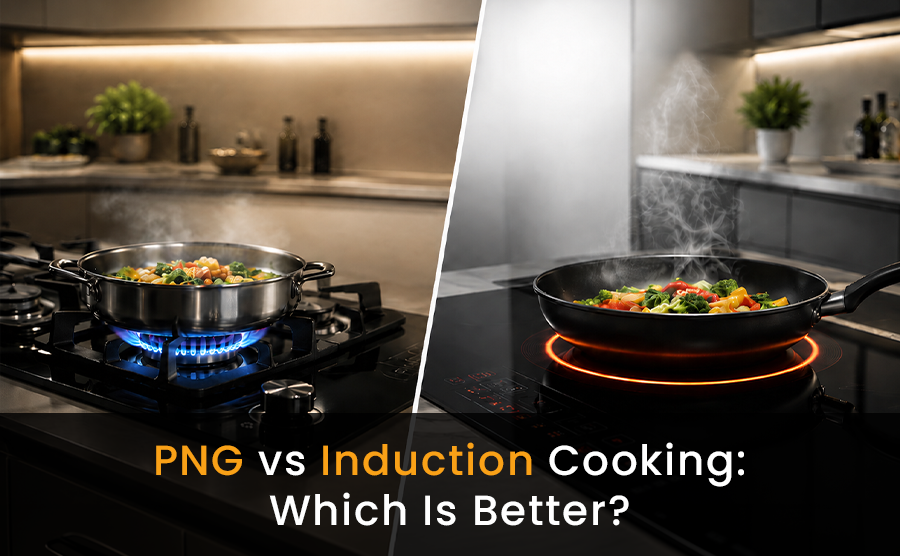
Induction cooking uses electricity instead of gas. An induction cooktop generates an electromagnetic field that heats the cookware directly, while the cooking surface remains comparatively cool. Since there is no open flame, many people find induction cooking safer and easier to clean. However, it only works with induction-compatible cookware.
Both cooking methods are suitable for modern homes, but the better choice depends on your lifestyle. For example, a large family that cooks several meals every day may have different needs than someone who lives alone or cooks only occasionally.
Comparing PNG and Induction Cooking for Everyday Use
Both PNG and induction cooking are popular choices for modern homes, but each offers a different cooking experience. The right option depends on factors such as your cooking habits, family size, budget, and daily energy needs.
While PNG provides the familiarity of flame-based cooking, induction offers a modern, electricity-powered alternative. Comparing them across key factors can help you decide which one is better suited to your home.
1. Cooking Speed and Performance
One of the biggest differences between PNG and induction cooking is how they deliver heat. PNG gas stoves provide an instant flame, allowing you to increase or reduce the heat immediately. This gives better control while preparing dishes that require frequent temperature adjustments, such as curries, stir-fries, or deep-fried snacks. Many Indian recipes also involve roasting, simmering, or cooking multiple dishes at once, making PNG a preferred choice for many households.
Induction cooktops are also known for their fast heating. Since they heat the cookware directly instead of the cooking surface, water and liquids often boil more quickly. This can help save time when preparing simple meals or reheating food.
However, some traditional cooking methods may feel more comfortable on a gas stove. For example, making rotis directly over an open flame or using very large utensils during family gatherings is generally easier with PNG cooking. Induction cooking also requires cookware that is compatible with induction technology, which may limit some cooking methods.
If your household prepares a variety of traditional meals every day, PNG may offer greater flexibility. On the other hand, if your cooking mainly involves boiling, sautéing, or quick meal preparation, induction can deliver excellent performance.
2. Cost and Long-Term Expenses
Cost is another important factor when deciding between PNG and induction cooking. It is helpful to look at both the initial investment and the ongoing monthly expenses.
Installing a PNG connection usually involves charges for the gas connection, meter installation, and pipeline setup. Once the connection is available, you can use a compatible gas stove without worrying about replacing cylinders.
Induction cooking generally has a lower starting cost because you only need an induction cooktop and induction-compatible cookware. It is often a convenient option for people living in rented homes or those looking for a portable cooking solution.
When it comes to monthly operating costs, the overall expense depends on your cooking frequency and local electricity and gas tariffs. Homeowners should check the applicable PNG prices in their geographical arearather than relying on a general cost estimate.
Homes that cook several meals every day may find PNG more economical over time because of its continuous gas supply and lower dependence on electricity.
For example, a family of five preparing breakfast, lunch, and dinner daily may have different running costs than a single professional who cooks only once a day. Evaluating your household’s cooking habits can help you estimate which option offers better value in the long run.
3. Safety and Everyday Use
Safety is always a priority when choosing a cooking system, and both PNG and induction cooking are designed with modern safety standards in mind.
PNG systems are considered safe when installed by authorised professionals and maintained properly. The gas is supplied through a secure pipeline network, and modern connections include safety measures to support safe operation.
However, because PNG uses combustible gas, users should ensure proper ventilation, inspect appliances regularly, and follow the recommended PNG safety guidelines. Homeowners should also understand the basic dos and don’ts for using natural gasin the kitchen.
Induction cooking does not use an open flame, which many homeowners consider an added advantage, especially in homes with children or elderly family members. Since only the cookware gets heated, the cooktop surface usually remains much cooler than a gas stove after cooking.
That said, induction cooktops rely entirely on electricity. Safe electrical wiring, compatible power connections, and proper handling of the appliance are equally important to ensure safe operation.
When used responsibly and maintained correctly, both cooking methods provide a safe and reliable cooking experience.
4. Energy Efficiency and Environmental Impact
Many homeowners today also consider how their cooking choices affect energy consumption and the environment.
PNG is widely recognised as a cleaner fuel compared to many conventional cooking fuels. It burns efficiently and produces lower emissions, making it a preferred option for many urban households looking for a cleaner energy source. Readers can also explore IOAGPL’s broader approach to sustainability and cleaner energy use.
Induction cooking is also highly energy efficient because the heat is transferred directly to the cookware, with very little energy lost to the surrounding air. This allows food to heat quickly while reducing unnecessary heat inside the kitchen.
However, induction cooking depends entirely on electricity. Its overall environmental impact can vary depending on how electricity is generated in your area. If the electricity comes from cleaner energy sources, induction cooking can become an even more sustainable option.
Both PNG and induction cooking offer cleaner alternatives to traditional fuels. Choosing between them depends on your home’s energy availability, cooking needs, and long-term preferences.
For many households, the decision is less about which option is universally better and more about which one fits their lifestyle more effectively.
5. Ease of Use and Maintenance
Daily convenience plays a major role in choosing the right cooking system.
PNG cooking is familiar to most households and works with a wide range of utensils. Cooking during power cuts is also possible because PNG supply remains available even when electricity is unavailable.
Induction cooking provides a sleek and modern kitchen experience. Since there is no open flame or soot formation, cleaning the cooking surface is usually easier.
However, induction cooktops require induction-compatible cookware. Some households may need to purchase new utensils if their existing cookware does not support induction technology.
Maintenance requirements for both systems are generally manageable when used properly.
How to Choose Between PNG and Induction Cooking
The best cooking option depends on your household’s size, cooking habits, and daily requirements. Both PNG and induction cooking have their own advantages, so choosing the right one becomes easier when you consider how you use your kitchen every day.
PNG cooking may be a better choice for:
- Large families that prepare multiple meals every day
- Households that regularly cook traditional Indian dishes
- Homes looking for a continuous and reliable cooking fuel supply
- People who prefer cooking with an open flame and using different types of cookware
Induction cooking may be a better choice for:
- Small families, couples, or individuals with lighter cooking needs
- Modern apartments with limited kitchen space
- People who prefer easy cleaning and a portable cooking appliance
- Users looking for an electricity-based cooking solution
Many households also use both systems together. For example, an induction cooktop can serve as a convenient backup while the PNG stove is used for preparing larger or more complex meals.
What to Consider Before Choosing PNG or Induction
Before choosing between PNG and induction cooking, it is important to think about your household’s daily needs and cooking habits. What works well for one family may not be the best choice for another, so considering a few practical factors can help you make a more informed decision.
Some important factors to consider include:
- How often you cook and the number of meals prepared each day
- The size of your family and your overall cooking requirements
- Your monthly budget for gas or electricity expenses
- The available space in your kitchen for cooking appliances
- The reliability of the electricity supply in your area
- Your preferred cooking style and the type of dishes you prepare
- Safety needs based on your household and lifestyle
For example, homes in areas with frequent power outages may find PNG more dependable for uninterrupted cooking. On the other hand, people living in rented apartments or smaller homes may prefer an induction cooktop because it is portable, easy to install, and convenient to move.
Evaluating these factors can help you choose the cooking solution that best suits your home and lifestyle. Homeowners with questions about metering, supply, appliance conversion, or billing can also consult the Residential PNG FAQs.
Conclusion
The comparison between PNG vs induction cooking depends largely on individual household needs, cooking habits, and long-term convenience. Both systems offer modern, efficient, and cleaner cooking solutions for today’s homes.
PNG cooking remains a preferred choice for families that require regular cooking support, continuous fuel supply, and traditional cooking flexibility. Induction cooking, meanwhile, offers convenience, easy maintenance, and modern kitchen functionality for users seeking electric cooking alternatives.
Instead of choosing based only on trends, homeowners should focus on practical daily requirements, energy usage, safety, and overall convenience. A well-informed decision can help create a more efficient, comfortable, and reliable cooking experience for the entire household.