
Blog
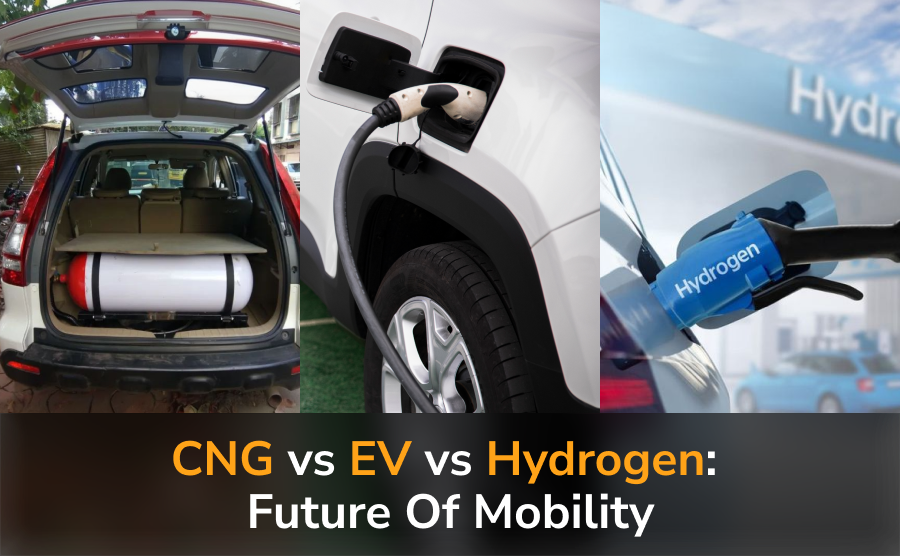
CNG vs EV vs Hydrogen: Future of mobility
Introduction
Rising fuel costs and growing environmental concerns are changing how people choose their vehicles today. Many users are now actively looking for cleaner and more cost-effective alternatives to traditional petrol and diesel cars. This shift has brought options like CNG, electric vehicles, and hydrogen vehicles into focus as practical solutions.
However, choosing between these options is not always simple. Each one comes with its own advantages, limitations, and suitability depending on your daily driving needs. Understanding these differences can help you avoid confusion and make a confident decision.
This guide on CNG vs EV vs hydrogen is designed to simplify your choice by explaining how each option works and what it offers, so you can move forward with clarity in the evolving future of mobility.
What Are CNG Vehicles and How Do They Work
CNG vehicles use Compressed Natural Gas as a fuel, which is stored in strong high-pressure cylinders fitted inside the vehicle. The gas is supplied to the engine through a controlled system, where it mixes with air and gets ignited to produce power and keep the vehicle running smoothly.
In India, CNG cars are widely used because they offer low running costs and are easily available in many cities. They are a practical choice for daily commuters and commercial users who want to reduce their fuel expenses without compromising on reliability.
When looking at options like CNG vs EV vs hydrogen, CNG stands out as a simple and cost-effective solution for current needs. It is also a cleaner fuel compared to petrol and diesel, which helps reduce emissions and supports a more sustainable and responsible way of driving.
Understanding Electric Vehicles and How They Operate
Electric vehicles, commonly known as EVs, run on electricity instead of petrol or diesel. They use an electric motor for movement, and the energy comes from batteries that can be charged at home or at public charging stations. This simple system reduces the need for traditional fuel and makes driving more efficient.
EVs are becoming a popular choice, especially in cities, because they offer lower running costs and a cleaner driving experience. Since they do not produce tailpipe emissions, they help reduce air pollution and support a healthier environment.
When exploring options like CNG vs EV vs hydrogen, EVs stand out for their modern technology and eco-friendly benefits.
Some key advantages of EVs include:
- Lower running cost compared to fuel-based vehicles
- Zero tailpipe emissions for cleaner air
- Smooth and quiet driving experience
With growing infrastructure and government support, EVs are becoming a strong part of the future of mobility in India.
How Hydrogen Cars Run and Produce Energy
Hydrogen vehicles operate using fuel cell technology that generates electricity from hydrogen gas. Instead of storing power like battery-based cars, these vehicles convert hydrogen into electricity through a chemical reaction inside the fuel cell, which then powers the motor to move the vehicle.
One of the biggest advantages of hydrogen vehicles is their clean output. They release only water vapor, making them one of the most environmentally friendly options available today.
When comparing CNG vs EV vs hydrogen, hydrogen stands out for its long-term sustainability and clean energy potential.
Some key highlights of hydrogen vehicles include:
- Extremely low emissions with only water vapor as output
- Fast refueling compared to charging EVs
- Promising technology for future transportation
However, hydrogen cars in India are still at an early stage, with limited infrastructure and availability. While they show strong promise, they are not yet a practical choice for everyday use in the current future of mobility landscape.
Detailed Comparison of CNG, Electric, and Hydrogen Vehicles
Choosing between CNG, electric vehicles, and hydrogen cars can feel overwhelming. To make an informed decision, it helps to compare them across important factors that affect daily use, cost, performance, and long-term convenience.
1. Cost Comparison Across CNG EV and Hydrogen Vehicles
CNG vehicles are the most affordable when it comes to the initial investment and are easily accessible for most buyers. Electric vehicles usually have a higher upfront price because of battery technology, but they offer lower running costs over time, making them economical for daily city use. Hydrogen vehicles are currently the most expensive option due to limited production and advanced fuel cell technology, which makes them less practical for everyday users at present.
2. Mileage and Efficiency Comparison
CNG cars deliver consistent mileage and reliable performance for regular commuting. Electric vehicles are highly efficient, especially in stop-and-go city traffic, as they convert most of the stored energy directly into motion. Hydrogen vehicles also show good efficiency, but their real-world performance depends heavily on infrastructure availability, which is still limited in India.
3. Performance and Driving Experience Comparison
Electric vehicles are known for smooth and quiet driving along with quick acceleration, offering a comfortable city and highway experience. CNG cars are reliable but may feel slightly less powerful than petrol or electric cars, especially under heavy load. Hydrogen vehicles can offer performance comparable to EVs, but since they are not widely available, most users have limited real-world experience with them.
4. Maintenance and Running Cost Comparison
CNG vehicles need regular checks for pipelines, valves, and cylinders to ensure safety. Their maintenance is straightforward and widely supported. Electric vehicles generally have fewer moving parts, reducing day-to-day maintenance needs, though battery replacement can be expensive in the long term. Hydrogen vehicles require specialized systems and service, which are not yet commonly available, increasing overall maintenance costs.
5. Infrastructure and Availability in India
CNG has a well-established fueling network in many Indian cities, making it a convenient choice. Electric vehicle charging infrastructure is growing steadily, particularly in urban areas, but further expansion is still required. Hydrogen refueling stations are extremely limited, making hydrogen vehicles difficult to use for everyday commuting.
6. Safety Comparison Across All Three Options
All three vehicle types are safe when properly maintained and used according to guidelines. CNG vehicles follow strict safety standards with robust cylinders and controlled fuel systems. Electric vehicles are designed with advanced safety features and battery protection systems. Hydrogen vehicles also adhere to high safety standards, though real-world examples remain limited due to their low presence.
7. Environmental Impact Comparison
CNG is cleaner than petrol and diesel, producing fewer harmful emissions. Electric vehicles produce zero tailpipe emissions, making them a strong option for reducing urban air pollution. Hydrogen vehicles are among the cleanest options, releasing only water vapor. However, the overall environmental benefit depends on how hydrogen is produced and whether renewable energy is used in the process.
By comparing CNG vs EV vs hydrogen, it becomes clear that each option has unique advantages. CNG is practical and affordable, EVs are efficient and increasingly convenient, and hydrogen promises a clean future once infrastructure and technology expand.
This guide helps you understand the differences and choose the option that fits your daily driving needs, budget, and environmental priorities.
Pros and Cons of CNG, EV, and Hydrogen Vehicles
Choosing the right alternative fuel vehicle depends on your priorities, budget, and daily driving needs. Each option, CNG, electric vehicles, and hydrogen cars, has its strengths and limitations.
CNG Vehicles
Pros
- Affordable initial investment and low running cost, ideal for budget-conscious users.
- Widely available fuel and service network across many cities.
- Simple maintenance and easy repairs compared to newer technologies.
Cons
- Slightly lower performance compared to petrol or electric vehicles, especially under heavy load.
- Reduced boot space due to the gas cylinder.
- Requires regular checks of pipelines, valves, and cylinders to ensure safety.
Electric Vehicles
Pros
- Smooth, quiet, and modern driving experience with quick acceleration.
- Zero tailpipe emissions, reducing environmental impact.
- Lower running costs and fewer moving parts, which reduces day-to-day maintenance.
Cons
- Higher upfront price because of battery technology.
- Charging infrastructure is still developing in some regions.
- Battery replacement can be expensive in the long term.
Hydrogen Vehicles
Pros
- Extremely clean, producing only water vapor as a byproduct.
- Promising technology for the future of sustainable mobility.
- Comparable driving experience to electric vehicles.
Cons
- Very high initial cost, making them less accessible.
- Limited refueling stations and infrastructure.
- Specialized maintenance and service requirements.
Understanding the pros and cons of CNG, EV, and hydrogen vehicles helps you make a clear decision based on your budget, driving habits, and environmental goals.
Which Option Is Best for Different Types of Users
When choosing between CNG, electric vehicles, and hydrogen vehicles, your daily driving habits and priorities matter. Different options suit different users, making it easier to select the most practical choice.
- CNG vehicles are ideal for users who have high daily running or long commutes and want to save significantly on fuel costs. They offer low running cost, affordability, and widely available fuel.
- Electric vehicles work best for city drivers who prefer a smoother and quieter driving experience, lower emissions, and modern technology for short to medium distances.
- Hydrogen vehicles show strong potential for the future as an extremely clean option, but currently, limited infrastructure and high cost make them less practical for most users.
Understanding your driving needs can help you select the vehicle that balances cost, efficiency, and convenience.
Future of Mobility in India
The future of mobility in India is focused on cleaner, more sustainable, and cost-effective transportation options. Electric vehicles are gaining momentum thanks to increasing government incentives, expanding charging infrastructure, and their zero-emission benefits. They are especially practical for urban commuters seeking a smooth and modern driving experience.
CNG vehicles remain a reliable and affordable choice for daily commuters and long-distance drivers, benefiting from well-established fuel networks in many cities. Their lower running costs and widespread availability make them a practical alternative for budget-conscious users.
Hydrogen vehicles are still in the early stages of adoption in India, but they show strong potential for the future. With advancements in technology and infrastructure, hydrogen could play an important role in creating a truly sustainable transportation system in the years to come.
How to Choose Between CNG, EV, and Hydrogen Vehicles
Making the right choice between CNG, electric vehicles, and hydrogen depends on your budget, daily driving needs, and access to fuel or charging infrastructure.
CNG vehicles: They are ideal for users looking for immediate fuel savings and easy access to a well-established network, making them practical for regular commuting and long-distance travel.
Electric vehicles: They are a good option for those who prioritize a modern, smooth driving experience with lower emissions and long-term efficiency. They are especially suitable for city driving where charging facilities are available.
Hydrogen vehicles: They show great promise for the future due to their clean performance, but currently, limited availability and infrastructure make them less practical for everyday use. Choosing the right option means balancing cost, convenience, and environmental impact to suit your lifestyle.
Conclusion
When looking at CNG vs EV vs hydrogen, there is no one-size-fits-all answer. Each option comes with its own benefits and limitations depending on your driving habits, budget, and access to fuel or charging infrastructure.
CNG vehicles are practical for those seeking low running costs and easy availability, making them ideal for daily commuting or long-distance travel. Electric vehicles are a cleaner choice with lower emissions, especially suitable for city driving and users who want a modern driving experience. Hydrogen vehicles show strong potential for the future, but limited infrastructure and high costs make them less practical today.
By considering your priorities, travel patterns, and long-term goals, you can make a confident choice that balances affordability, convenience, and sustainability while preparing for the future of mobility in India.