
Blog
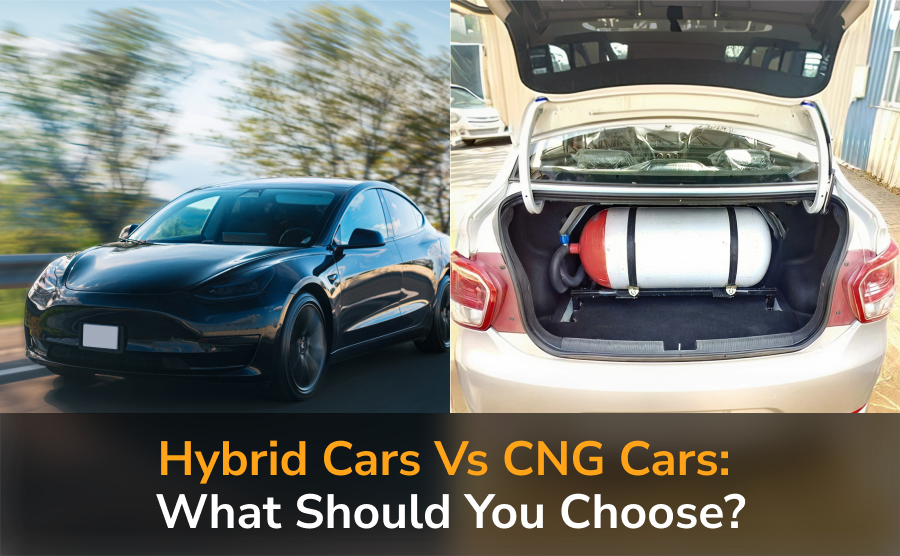
Hybrid Cars vs CNG Cars: What Should You Choose?
Introduction
Choosing between hybrid cars and CNG cars can feel confusing, especially when you are trying to balance fuel costs, daily usage, and long-term value. With rising fuel prices, many buyers are now looking for smarter and more efficient alternatives that can reduce expenses without compromising on practicality.
Both hybrid and CNG cars are designed to lower fuel costs and reduce emissions, but they work in different ways and suit different driving needs. Hybrid cars combine petrol and electric power to improve efficiency, while CNG cars offer a more affordable and widely used fuel option for everyday commuting.
If you are unsure which option fits your lifestyle, this hybrid vs CNG cars comparison will help you understand the key differences, practical benefits, and real-world usage so you can make a confident and informed decision.
What Are Hybrid Cars and How Do They Work?
Hybrid cars are designed to improve fuel efficiency by using a combination of a petrol engine and an electric motor. Instead of depending only on fuel, these cars automatically switch between the two power sources based on driving conditions, which makes them more efficient in everyday use.
At low speeds, especially in city traffic, the car can run on electric power, which helps reduce fuel consumption. When more power is needed, such as during acceleration or overtaking, the petrol engine starts working along with the motor. This transition happens smoothly, so the driver does not have to manage anything manually.
There are different types of hybrid systems, such as mild hybrids and strong hybrids, but the overall purpose remains the same. Hybrid cars help save fuel, reduce emissions, and provide a smoother driving experience, especially in stop-and-go traffic conditions.
What Are CNG Cars and How Do They Work?
CNG cars use Compressed Natural Gas as a fuel, which is stored in specially designed high-pressure cylinders fitted inside the vehicle. The gas is supplied to the engine through a controlled system, where it mixes with air and gets ignited to power the car efficiently.
In India, many CNG cars come with factory-fitted systems that are designed and tested by manufacturers, making them more reliable and safer for long-term use. Some users also choose approved aftermarket kits, but it is always important to ensure proper installation and certification for better performance and safety.
One of the main reasons why people consider CNG cars in a hybrid cars vs CNG cars comparison is their low running cost. CNG is much cheaper than petrol or diesel, which makes it a practical choice for daily commuting and frequent driving. With proper maintenance, CNG cars offer a cost-effective and dependable solution for everyday use.
Understanding the Differences Between Hybrid Cars and CNG Cars
Choosing between hybrid cars vs CNG cars often comes down to understanding how they perform in real-life situations. Both options are designed to reduce fuel costs and emissions, but they offer different benefits depending on your priorities. This hybrid vs CNG cars comparison will help you clearly understand what suits your budget, driving needs, and long-term expectations.
1. Cost Comparison
In a hybrid vs CNG cost comparison, the biggest difference is the initial price. Hybrid cars usually come with a higher upfront cost because of their advanced technology and battery systems, which can feel like a significant investment.
CNG cars are more affordable and easier to access for most buyers. Their running cost is also lower because CNG fuel is cheaper than petrol or diesel. Over time, hybrid cars can still help you save through better fuel efficiency, especially in city driving conditions where fuel usage is higher.
If your priority is to keep your initial spending low and save money immediately, CNG cars are a practical choice. If you are comfortable investing more upfront for long-term efficiency and better driving comfort, hybrid cars can be worth considering.
2. Mileage Comparison
In a hybrid vs CNG mileage comparison, both options deliver good efficiency, but they perform differently based on driving conditions. Hybrid cars are especially effective in city traffic, where the electric motor reduces fuel consumption during frequent stops and slow driving.
CNG cars are known for providing stable and consistent mileage in everyday use. Their efficiency does not change much with traffic conditions, which makes them reliable for regular commuting.
For drivers who spend a lot of time in traffic, hybrid cars can offer better fuel savings. For daily use with predictable routes, CNG cars remain a dependable and cost-effective option.
3. Performance and Driving Experience
Hybrid cars are known for offering a smoother and quieter driving experience. The electric motor improves pickup at low speeds and makes driving in traffic more comfortable. The transition between power sources is seamless and does not require any effort from the driver.
CNG cars focus more on efficiency than performance. While they are reliable for daily use, they may feel slightly less powerful compared to hybrid or petrol vehicles. Acceleration can be slower, especially when the car is fully loaded.
If you value comfort, smooth driving, and better performance, hybrid cars have an advantage. If your focus is on practical and cost-effective commuting, CNG cars still work well.
4. Maintenance Comparison
In a hybrid vs CNG maintenance comparison, hybrid cars have more complex systems that include batteries and electronic components. These systems are designed to last, but repairs can be expensive if any issues arise.
CNG cars require regular checks of pipelines, valves, and cylinder condition to maintain CNG vehicle maintenance safety. The servicing process is simpler and widely available, which makes it easier for most users to manage.
If you are looking for easier and more affordable maintenance, CNG cars are generally more convenient. Hybrid cars may need specialized care, but they are built for long-term efficiency.
5. Safety Comparison
Both hybrid and CNG cars are considered safe when they are properly maintained. Hybrid vehicles are built with advanced systems and go through strict testing to ensure reliability and safety.
CNG cars also follow well-defined safety standards, including strong cylinders and controlled fuel systems. Most safety concerns related to CNG are usually linked to poor maintenance or unauthorized modifications, rather than the fuel itself.
In real-world usage, both options offer dependable safety when proper care and regular servicing are followed.
6. Environmental Impact Comparison
Hybrid cars help reduce fuel consumption by using electric power, which lowers overall emissions and makes them a cleaner option compared to traditional vehicles.
CNG is also considered a cleaner fuel than petrol and diesel, as it produces fewer harmful emissions and supports better air quality.
When comparing environmental impact, both options are better than conventional fuel vehicles. Hybrid cars may have a slight advantage due to reduced fuel usage, but CNG cars still remain an eco-friendly and practical choice for everyday driving.
Pros and Cons of Choosing Hybrid Cars and CNG Cars
Before making a final decision in the hybrid cars vs CNG cars comparison, it is important to understand the real advantages and limitations of both options. Each type of vehicle offers practical benefits, but they also come with certain trade-offs that can affect your daily driving experience and long-term costs.
Hybrid Cars Pros and Cons
Hybrid cars are designed to offer better efficiency and comfort, especially for city driving, but they require a higher initial investment.
Pros:
- Better fuel efficiency, especially in stop-and-go traffic
- Smoother and quieter driving experience
- Lower emissions compared to traditional petrol vehicles
Cons:
- Higher upfront cost compared to other fuel options
- Repairs and replacements can be expensive
- Limited availability in some car segments
CNG Cars Pros and Cons
CNG cars are known for their affordability and practicality, making them a popular choice for everyday use.
Pros:
- Low running cost, ideal for daily commuting
- More affordable initial investment
- Easily available fuel and service network
Cons:
- Reduced boot space due to CNG cylinder
- Slightly lower performance compared to petrol or hybrid cars
- Requires regular maintenance and safety checks
Understanding these pros and cons will help you choose the option that fits your budget and driving needs more confidently.
Who Can Gain the Most from Hybrid Cars
Choosing the right vehicle in the hybrid cars vs CNG cars decision often depends on how you drive and what you expect from your car. Hybrid cars are designed for users who want better fuel efficiency along with a smoother and more comfortable driving experience, especially in everyday city conditions.
Hybrid cars are ideal for users who:
- Drive mostly in city traffic where frequent stops can increase fuel consumption
- Want a smoother, quieter, and more comfortable driving experience in daily use
- Are willing to invest more upfront for better long-term efficiency and fuel savings
- Prefer a more modern and environmentally friendly option with lower emissions
If your daily routine involves heavy traffic and you value comfort along with efficiency, hybrid cars can be a practical and future-ready choice.
Who Benefits Most from CNG Cars
For many buyers, the right car choice depends on how often they drive and how much they want to spend on fuel every day. CNG cars are a practical option for those who prioritize affordability and consistent savings over time, especially for regular commuting needs.
CNG cars are a better choice for users who:
- Have a high daily running or regularly commute long distances
- Want to save significantly on fuel costs over time
- Prefer a lower upfront investment compared to other fuel options
- Are comfortable with slightly lower performance in exchange for better savings
If your focus is on reducing everyday fuel expenses while keeping ownership costs under control, CNG cars can be a dependable and budget-friendly option.
Choosing Between Hybrid Cars and CNG Cars
Making the right choice in the hybrid cars vs CNG cars comparison depends on what matters most in your daily life. If your main focus is staying within budget and reducing fuel expenses from the start, CNG cars offer a practical and cost-effective solution. They are easier to maintain and provide consistent savings for regular use.
On the other hand, if you value a smoother driving experience, better comfort, and long-term efficiency, hybrid cars can be a better fit despite their higher initial cost.
Your decision should be based on your driving habits, daily distance, and overall priorities. Think about whether you want immediate savings or a more refined driving experience, and choose the option that fits your needs with confidence.
Conclusion
When comparing hybrid cars vs CNG cars, the right choice depends on your personal needs rather than a single fixed answer. Both options are designed to be fuel-efficient, cost-saving, and more environmentally friendly than traditional petrol or diesel vehicles, which makes them strong alternatives in today’s market.
CNG cars are a great fit for users who want immediate savings on fuel and prefer a more budget-friendly option for daily commuting. Hybrid cars, on the other hand, are better suited for those who value smoother performance, better comfort, and modern technology, even if it comes with a higher upfront cost.
By understanding your driving habits, daily usage, and long-term expectations, you can choose the option that fits your lifestyle naturally and make a decision that feels both practical and confident.