
Blog
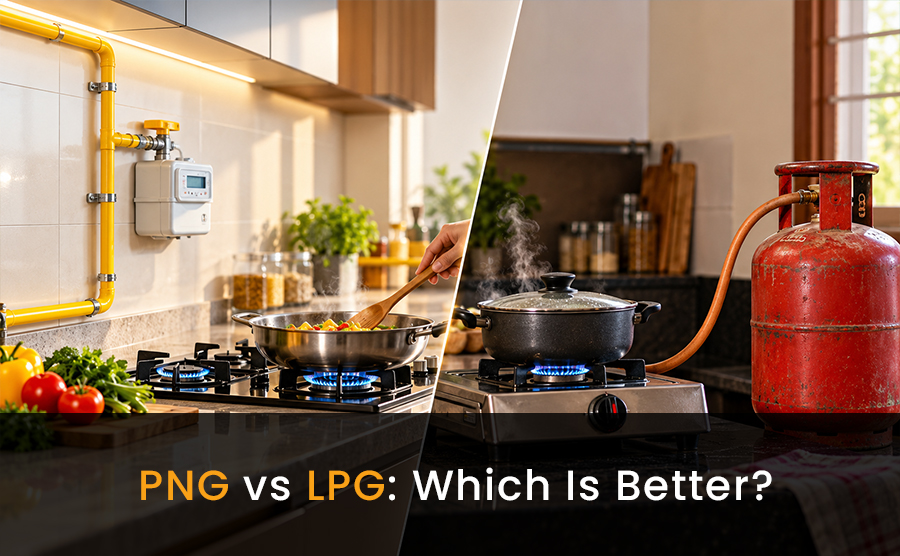
PNG vs LPG in 2026: Key Differences, Cost, Safety and Which Is Better
Choosing the right cooking fuel can affect your monthly expenses, daily convenience, and kitchen safety. In India, LPG cylinders have long been a common choice for cooking, while Piped Natural Gas (PNG) is becoming more available in cities and residential areas.
This makes the PNG vs LPG comparison important in 2026. Both fuels are used for everyday cooking, but they differ in supply, storage, billing, availability, and usage.
PNG is supplied directly to the kitchen through a pipeline, with charges based on metered consumption. LPG is stored in a pressurised cylinder that must be booked, delivered, and replaced when empty.
So, which is better, PNG or LPG? The right choice depends on your location, cooking needs, fuel costs, and access to a PNG connection.
Quick Answer: PNG and LPG can both be suitable for household cooking, but they work differently. PNG offers piped supply, metered billing, and removes the need for regular cylinder replacement, while LPG offers wider availability in locations where PNG infrastructure is not available. The actual cost depends on local fuel prices and household consumption.
What Is PNG and LPG?
What Is PNG?
PNG stands for Piped Natural Gas and is mainly made up of methane. It is supplied to homes through an underground pipeline network and passes through a meter that records gas consumption. The household then pays based on the amount of PNG used.
Households interested in learning more about how piped gas works can explore IOAGPL’s Residential Piped Natural Gas (PNG) information.
What Is LPG?
LPG stands for Liquefied Petroleum Gas. It is stored as a liquid under pressure in a cylinder and turns into gas when released for cooking. Domestic LPG cylinders are booked and delivered to homes when the existing cylinder is empty.
The main difference between PNG and LPG is how they reach your kitchen. PNG is supplied through a pipeline, while LPG is supplied in cylinders.
PNG vs LPG Comparison for Home Cooking
PNG and LPG are both widely used for cooking in Indian homes, but they work differently in terms of supply, storage, billing, and everyday use.
| Factor | PNG | LPG |
|---|---|---|
| Full form | Piped Natural Gas | Liquefied Petroleum Gas |
| Supply | Through a pipeline | Through cylinders |
| Storage at home | No gas cylinder required | Cylinder required |
| Billing | Based on metered consumption | Usually paid per cylinder |
| Availability | Depends on pipeline network | Widely available through distributors |
| Refilling | No regular cylinder replacement | Cylinder needs to be booked and replaced |
| Leak behaviour | Natural gas is lighter than air | LPG is heavier than air |
| Upfront requirement | PNG connection and installation may be required | Cylinder, regulator and compatible equipment required |
| Price comparison | Depends on local tariff and consumption | Depends on cylinder price and refill frequency |
| Best suited for | Homes with PNG network access | Homes without PNG access or where cylinders are more practical |
The differences become clearer when you look at how each fuel fits into everyday household use.
What Is the Difference Between PNG and LPG?
1. PNG vs LPG Cost: Which Can Be More Economical?
Cost in 2026 is one of the first factors people consider when comparing PNG and LPG.
With PNG, a meter records the amount of gas consumed, and the household pays according to usage. LPG is generally purchased by the cylinder, so monthly expenditure depends on how frequently a household needs a refill.
The actual cost can vary based on local PNG tariffs, LPG prices, household consumption, taxes, and other applicable charges.
For a realistic PNG vs LPG cost comparison, compare your average expenditure over several months instead of comparing the cost of one LPG cylinder with a single unit of PNG.
Since PNG rates can differ by service area, consumers should check the current PNG price in their location before calculating potential cooking-fuel expenses.
2. PNG vs LPG Safety: What Is the Difference?
Safety is another important factor when choosing between PNG and LPG. Both fuels can be used safely when installations, appliances, and connections are properly maintained.
However, they behave differently if a leak occurs.
PNG is mainly made up of methane and is lighter than air, so leaked gas tends to rise and disperse where adequate ventilation is available. LPG is heavier than air and may collect closer to the floor.
PNG also does not require a gas cylinder to be stored at home. However, this does not eliminate the need for correct installation, proper ventilation, maintenance, and safe use of gas appliances.
PNG users should always follow the recommended natural gas safety guidelines and applicable instructions provided by the authorised gas distributor.
3. Convenience
Convenience can make a noticeable difference in everyday cooking.
PNG is supplied directly to the kitchen through a pipeline, so households do not need to regularly book and replace cylinders. A meter records consumption, and the household receives a bill based on the amount of gas used.
LPG requires a refill when the cylinder is empty or running low. The household also needs suitable space to store the cylinder safely.
For families that cook regularly, direct PNG supply can simplify fuel management, while LPG remains practical for homes that prefer or require cylinder-based supply.
4. Availability
Availability depends largely on the infrastructure in your area.
PNG can be used only where a pipeline network has been developed and the property is covered by the authorised gas distributor. Access can therefore vary between cities, neighbourhoods, and individual residential buildings.
LPG has a wider geographical reach because cylinders can be transported and delivered to homes. This makes LPG useful in areas where PNG infrastructure is not yet available.
Consumers interested in switching can first check whether residential PNG services are available in their area.
5. Connection and Equipment Requirements
PNG and LPG require different equipment and installation arrangements.
A PNG connection generally includes an approved pipeline connection, gas meter, regulator, and other components specified by the authorised gas distributor. The connected cooking appliance and installation must meet the supplier’s requirements.
LPG requires a cylinder, regulator, hose, and compatible cooking appliance. The cylinder should be installed and stored according to the supplier’s safety instructions.
If you are considering switching to piped gas, it is also useful to understand the various charges that may be involved in a PNG connection cost in India.
The rules around domestic LPG and PNG connections have also evolved. Eligible consumers shifting from LPG to PNG may have options relating to surrendering or transferring their LPG connection depending on applicable government provisions.
6. Environmental Impact
Environmental impact is another factor to consider when comparing PNG and LPG.
PNG is primarily methane and generally burns more cleanly than several conventional household fuels, producing lower emissions of some pollutants during combustion.
LPG is also considered a relatively clean-burning cooking fuel and continues to be widely used across India.
However, neither fuel is completely pollution-free. Their overall environmental impact also depends on consumption, transportation, distribution, leakage, and the infrastructure used to supply the fuel.
For households, environmental considerations can be evaluated alongside cost, availability, cooking habits, and practical requirements.
Is PNG Cheaper Than LPG?
There is no single nationwide answer to whether PNG is cheaper than LPG because prices can vary by city, service area, tariff structure, and time.
PNG billing is based on metered consumption. LPG expenditure depends mainly on the price of the cylinder and how frequently the household requires a refill.
A household that wants to compare costs should consider:
- Current PNG tariff in its area
- Current LPG cylinder price
- Average household gas consumption
- Number of LPG refills used over several months
- Any connection or applicable service charges
Checking the applicable PNG tariff or current PNG price can help make the comparison more realistic.
Is PNG Safer Than LPG?
Both PNG and LPG require safe installation, ventilation, and proper appliance maintenance.
Their physical behaviour differs when leakage occurs. Natural gas used in PNG is lighter than air and generally rises when released, while LPG is heavier than air and can accumulate closer to floor level.
PNG also removes the need to keep a pressurised LPG cylinder inside the home. However, PNG pipelines, meters, valves, and appliances still need to be correctly installed and maintained.
Users should always follow supplier instructions and established PNG safety practices.
Advantages of PNG Over LPG
For households with access to an established PNG network, piped gas can offer several practical advantages:
- Continuous pipeline-based supply
- No regular cylinder booking
- No routine cylinder replacement
- Metered consumption-based billing
- Less need for cylinder storage
- Convenient supply for regular cooking
- Reduced dependence on delivery schedules
These advantages are particularly relevant for households that use cooking gas regularly and already have PNG infrastructure available in their locality.
Advantages of LPG Over PNG
LPG also offers several practical benefits, especially where piped gas infrastructure is unavailable.
These include:
- Wider geographical availability
- Established cylinder distribution network
- Suitable for locations without PNG pipelines
- Familiar cylinder-based cooking system
- Easier portability when moving between certain locations
- No dependence on a local underground gas network
For many households, availability remains the main reason LPG continues to be practical.
How to Choose Between PNG and LPG
The right cooking fuel depends on your location, cooking needs, monthly consumption, and access to PNG infrastructure.
PNG May Suit You If You Prefer:
- Direct gas supply through a pipeline
- Metered billing based on consumption
- No regular cylinder booking or replacement
- Less requirement for cylinder storage
- Convenient fuel supply for everyday cooking
LPG May Suit You If You Prefer:
- Wider availability across different locations
- Cylinder-based fuel supply
- Access to cooking gas where PNG pipelines are unavailable
- A familiar and established cooking fuel system
- Greater flexibility in places without permanent pipeline infrastructure
Before making a decision, compare local fuel prices, expected monthly consumption, connection charges, and PNG availability.
You can also review IOAGPL’s domestic PNG FAQs if you have questions about connections, meters, appliances, or household PNG usage.
The Future of PNG and LPG in India
The PNG and LPG landscape in India is likely to continue evolving as energy infrastructure, consumer demand, and fuel distribution systems develop.
PNG networks are expanding into more geographical areas, making piped gas accessible to more households. At the same time, LPG continues to serve a large consumer base through its established distribution network.
Future fuel choices may therefore depend increasingly on local pipeline coverage, pricing, infrastructure, and household access.
Government initiatives supporting city gas distribution and domestic PNG infrastructure may further increase piped-gas availability in suitable areas. LPG is also expected to remain important, particularly where pipeline infrastructure is limited.
For consumers, the choice between PNG and LPG will continue to depend on availability, cost, convenience, safety requirements, and changing household energy needs.
Conclusion
The PNG vs LPG decision comes down to availability, cost, convenience, safety, and household usage.
PNG offers direct pipeline supply, metered billing, and eliminates regular cylinder replacement. LPG offers wider availability through an established cylinder-based distribution system.
For households with access to a reliable PNG network, piped gas can be a convenient option for regular cooking. LPG remains practical in areas where PNG infrastructure is unavailable.
Before switching, check the current PNG tariff in your area, your average LPG consumption, connection costs, and service availability.
If PNG is available at your property and you want to switch to piped gas, you can submit a residential PNG connection request with IOAGPL.