
Blog
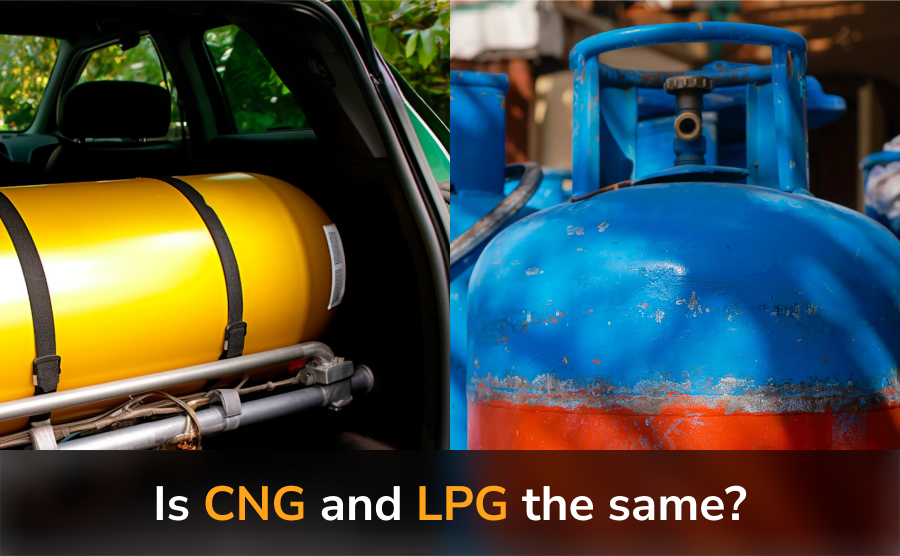
Is CNG and LPG the same?
Introduction
Many people still use CNG and LPG interchangeably, especially when talking about cooking gas or vehicle fuel. Questions like “Is CNG and LPG the same?”, “Can LPG be used in a CNG stove?”, or “Which is better, CNG or LPG?” come up often because both fuels seem similar at first glance. They are clean-burning, widely available, and used in everyday life across India.
However, despite these similarities, CNG and LPG are not the same. Their composition, behaviour, and applications are different, and understanding these differences is important for safety, performance, and making the right choice for your home or vehicle.
This blog explains the difference between CNG and LPG in simple, clear language. It also highlights which fuel is better suited for cooking, which one works better in vehicles, and how they compare in terms of efficiency, cost, and safety.
Let’s begin by understanding what each fuel actually is.
What are CNG and LPG?
Many people mix up CNG and LPG because both are gas fuels used in homes and vehicles. But the two are very different in how they are made, stored, and used. To clear the confusion, here’s a simple explanation of each fuel and what makes them unique.
CNG
CNG (Compressed Natural Gas) is mainly methane that is compressed and stored in strong, high-pressure cylinders. It is commonly used as a vehicle fuel through CNG filling stations and city gas networks. Because methane burns very cleanly, CNG produces fewer emissions, making it one of the cleanest and most eco-friendly fuels for everyday travel. This is why many car owners and transport services prefer CNG for lower running costs and reduced pollution.
LPG
LPG (Liquefied Petroleum Gas) is a mixture of propane and butane. It is stored as a liquid in the household cylinders we use for cooking. When the regulator is opened, LPG turns into gas and flows into the stove. LPG is the primary cooking fuel for millions of Indian homes and can also power certain vehicles with specialised LPG kits.
Both are gases, but their behaviour, purpose, and safety requirements are different. This is where most confusion begins, so understanding these basics helps make the right choice.
How CNG and LPG Differ in Everyday Use
The difference between CNG and LPG becomes much clearer when you look at how they are made, stored, and used in daily life. These three factors explain why both fuels behave differently and why they cannot be used as substitutes for each other.
1. Composition
CNG (Compressed Natural Gas) is mainly methane, a light and clean-burning gas. LPG (Liquefied Petroleum Gas), on the other hand, is a mix of propane and butane, which produces more heat and energy. Because these gases burn at different temperatures and release different amounts of energy, their performance varies depending on where they are used.
2. Storage
CNG is stored as a compressed gas inside strong, reinforced cylinders that can handle very high pressure. This is why CNG cylinders in vehicles are heavy and extremely sturdy. LPG is stored as a liquid under moderate pressure in the familiar domestic cylinders used for cooking. Its storage system is simpler, but the pressure requirements make it unsuitable for CNG setups.
3. Use
CNG is mostly used as a clean and cost-effective fuel for vehicles. LPG is primarily used for cooking and heating, and can power some vehicles only when a proper LPG conversion kit is installed. Because of these differences, CNG and LPG are not interchangeable, and using one in place of the other without conversion can be unsafe.
Which Fuel Works Best for Your Driving Needs
When choosing between CNG and LPG for vehicles, it helps to understand how each fuel performs in real driving conditions. The main differences become clear when you look at performance, mileage, emissions, safety, and long-term cost.
These factors decide which fuel suits your daily travel needs:
1. Performance
CNG offers cleaner and smoother combustion, which helps the engine stay healthy for a longer time with fewer carbon deposits. This makes it a reliable choice for regular city driving. LPG, however, delivers slightly higher power output, which some drivers prefer when it comes to pickup and acceleration. The right choice depends on whether you prioritise power or long-term engine condition.
2. Mileage
In most cases, CNG gives better mileage than LPG. This makes it more economical for people who drive frequently or cover long distances. LPG mileage is decent but usually lower than CNG, which can increase fuel expenses over time.
3. Emissions
CNG stands out as one of the cleanest vehicle fuels, producing significantly fewer pollutants. LPG burns cleaner than petrol but still releases more carbon dioxide compared to CNG. If reducing environmental impact matters to you, CNG has a clear advantage.
4. Safety
Both fuels are safe when installed and maintained properly. However, methane in CNG is lighter than air, so it disperses quickly in case of a leak. LPG is heavier and tends to settle, making leaks more risky if not handled with care.
5. Cost
CNG offers the lowest running cost per kilometre, which is why it is widely used in taxis and auto-rickshaws. LPG is slightly costlier and not as common for vehicles.
If your focus is on daily savings, cleaner emissions, and reliable city driving, CNG is usually the better choice. LPG may suit you if you prefer a bit more power and live in an area with fewer CNG stations.
How CNG, LPG, and PNG Work for Household Cooking
Many people are unsure whether CNG can be used for cooking, which often leads to confusion between CNG, LPG, and PNG. The simplest way to understand the difference is to look at how each one is supplied and used at home.
LPG is the fuel most households rely on for cooking. It comes in cylinders, creates a strong and steady flame, and is fully compatible with standard kitchen stoves. This makes it easy to use and widely available across cities and rural areas.
CNG, on the other hand, is not delivered to homes in cylinders. What households receive is PNG, Piped Natural Gas. PNG and CNG are essentially the same natural gas, but PNG is supplied directly through pipelines instead of cylinders. This makes the fuel supply continuous, eliminates the need for cylinder storage, and removes the hassle of bookings or delivery charges. PNG also operates at lower pressure, which adds an extra layer of safety for home use.
One important point is compatibility. A stove designed for LPG cannot be connected to PNG or CNG without a proper conversion. This adjustment must be done by an authorised technician to ensure safety. Because of this requirement, many people search for PNG vs LPG before deciding to switch.
How Safe Are CNG and LPG
Safety becomes an important question for anyone choosing between CNG and LPG. Both fuels are widely used, and both are considered safe when the system is installed correctly and maintained on time. However, the way each gas behaves during a leakage is very different, and that is where most of the confusion starts.
- CNG Safety: CNG is lighter than air, so if a leak occurs, the gas immediately rises and spreads into the open air. Because it does not stay trapped in one place, the chances of dangerous buildup are far lower. This natural behaviour makes CNG safer in open and ventilated areas.
- LPG Safety: LPG behaves differently. It is heavier than air, so a leak can cause it to settle near the floor or in low corners. If not detected quickly, this trapped gas can become risky. That is why regular checks of LPG pipes, regulators, and burners are so important.
- Ignition Factor: CNG also needs a higher temperature to catch fire, while LPG ignites more easily.
Overall, CNG has a natural safety advantage, but LPG remains safe as long as the equipment is well-maintained and any unusual smell is addressed immediately.
Conclusion
CNG and LPG may look similar, but they are not the same. They differ in composition, behaviour, storage method, safety level, and everyday use. CNG, made of methane, is mainly used in vehicles and city pipelines, while LPG, a mix of propane and butane, remains the primary fuel for cooking. Their leakage behaviour also varies; CNG rises and disperses faster, while LPG settles near the floor, which is why they must be handled differently.
When choosing between the two, focus on your requirement. For vehicles with lower running costs and cleaner emissions, CNG is the better choice. For home cooking that needs a strong, steady flame, LPG works best. And for homes with pipeline access, PNG offers the highest convenience.
Understanding these differences helps you use each fuel safely and confidently.