
Blog
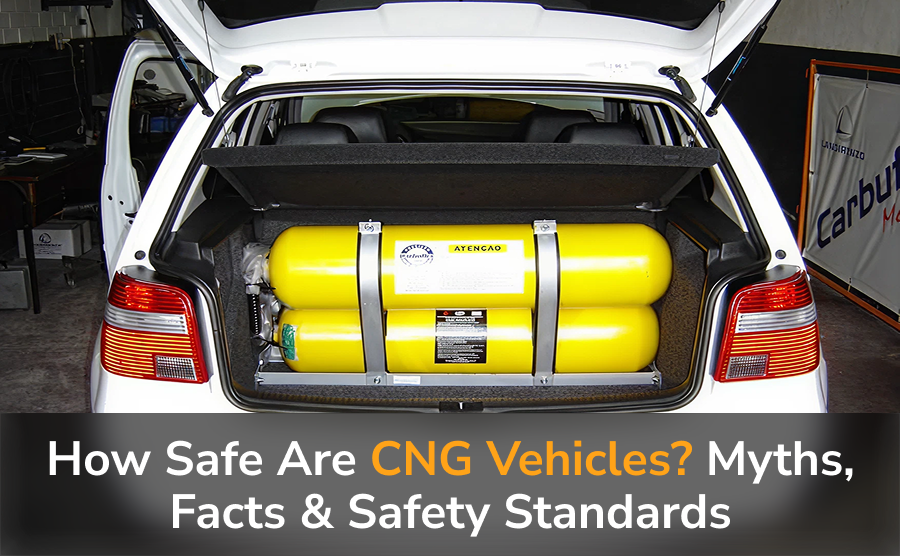
How Safe Are CNG Vehicles? Myths, Facts & Safety Standards
Introduction
Many vehicle owners and fleet operators continue to wonder, are CNG vehicles safe for daily use? Concerns about gas leaks, fire hazards, and accident risks are common, especially when comparing CNG vs petrol safety. With more vehicles shifting to CNG due to rising fuel costs and environmental benefits, it is natural to question CNG vehicle safety before making a decision.
If you are unsure whether CNG is the right and secure option for your car or commercial fleet, your concerns are valid. Making a fuel switch is a serious decision that affects safety, cost, and performance. In this blog, we address common myths about CNG vehicles, explain the facts behind CNG cylinder safety, and highlight the CNG car safety standards and regulations in India to help you make a confident, informed choice.
How CNG Powers Your Vehicle
To truly understand CNG vehicle safety, it is important to first know how the system works. Compressed Natural Gas, or CNG, is stored in specially designed high-pressure cylinders installed inside the vehicle. These cylinders are made from strong, tested materials and built to meet strict CNG car safety standards, ensuring they can safely handle high pressure during daily use.
Unlike petrol or diesel, which are stored as liquids, CNG is stored as compressed gas. It travels through sealed pipelines to the engine, where it mixes with air and burns efficiently. Modern vehicles are equipped with advanced safety features such as pressure regulators, automatic shut-off valves, and leak detection systems to enhance CNG cylinder safety.
This setup is not just a gas tank added to a car. It is a carefully engineered system designed to comply with approved safety regulations and reduce risks when properly maintained.
Common Myths About CNG Vehicle Safety
When discussing CNG vehicle safety, many concerns come from myths rather than verified facts. We understand why these doubts exist, especially when safety is your top priority. Let us address some common myths about CNG vehicles so you can look at the issue with clarity and confidence.
Myth 1: CNG Vehicles Explode Easily
One of the most common fears is that CNG vehicles can explode easily. In reality, CNG has a higher ignition temperature than petrol or diesel, which means it requires much more heat to catch fire. This already reduces the risk of accidental fire.
In addition, strict CNG cylinder safety standards require cylinders to handle very high pressure and impact. Before approval, they undergo detailed strength and pressure testing to ensure durability under real-world conditions.
Myth 2: CNG Is More Dangerous Than Petrol or Diesel
Many people assume that because CNG is a gas, it must be more dangerous. However, when comparing CNG and petrol in terms of safety, CNG offers certain advantages.
CNG is lighter than air, so if a leak occurs, the gas disperses upward quickly instead of collecting near the ground like petrol vapours. This reduces the chance of fire buildup in open spaces.
Myth 3: CNG Cylinders Are Weak
Another myth is that CNG cylinders are fragile. In truth, they are made from thick steel or advanced composite materials and must meet strict CNG car safety standards before being certified for use.
Myth 4: CNG Is Unsafe in Accidents
Many vehicle owners ask, is CNG safe in accidents? Modern systems include pressure relief devices that release gas in a controlled way during extreme heat, reducing explosion risk.
Understanding these facts helps separate fear from reality and supports informed decisions about CNG use.
Key Facts About CNG Vehicle Safety
After clearing the common myths, it is important to focus on the verified facts about CNG vehicle safety so you can make decisions based on evidence rather than fear.
- CNG has a narrow flammability range compared to petrol, which means it ignites only under specific air-to-fuel conditions, reducing the chances of accidental fire.
- CNG cylinders are built to be stronger than conventional fuel tanks and are pressure-tested well beyond normal operating limits to meet strict CNG car safety standards.
- Modern CNG vehicles include automatic shut-off valves that immediately stop gas flow if the engine turns off unexpectedly, adding an extra layer of protection.
- Certified kits and factory-fitted systems must comply with government safety standards for CNG to ensure safe manufacturing and proper installation.
When these systems are properly installed and maintained, CNG offers a reliable and well-regulated fuel option.
What Safety Standards Do CNG Vehicles Follow in India?
When it comes to CNG vehicle safety, clear rules and proper monitoring make a real difference. In India, CNG safety regulations in India are well-defined to ensure vehicles operate safely when standards are followed correctly.
- CNG cylinders must comply with approved automotive norms and meet strict CNG car safety standards before they are allowed for use.
- Cylinders are required to undergo periodic testing and re-certification at regular intervals to maintain CNG cylinder safety and structural strength.
- Only approved CNG kits and certified installation centers are legally permitted to install CNG systems, reducing the risk of faulty fittings.
- Government safety standards for CNG mandate proper labeling, pressure regulators, and leak-proof pipelines to minimize operational risks.
When vehicle owners follow these regulations and choose authorized service providers, CNG systems operate within a controlled and reliable safety framework.
How Do CNG Vehicles Perform in Everyday Use?
When evaluating CNG vehicle safety, real-world usage provides strong reassurance. Across India, thousands of taxis, buses, and commercial fleets operate daily on CNG without major safety concerns. If the CNG explosion risk were significantly higher than other fuels, such widespread adoption would not have been possible.
In fact, many urban transport systems depend heavily on CNG-powered vehicles because they meet both operational and CNG car safety standards. Practical experience shows that most incidents related to CNG are usually linked to poor maintenance or unauthorized kit installations, not because CNG itself is unsafe.
When vehicles follow proper service schedules and comply with CNG safety regulations in India, they maintain a stable and reliable safety record comparable to petrol and diesel vehicles, giving owners greater confidence in their decision.
When Does CNG Vehicle Maintenance Affect Safety?
While CNG vehicle safety is well-supported by regulations and engineering, certain situations can increase risk if not handled responsibly. We understand that safety is your priority, so it is important to know where problems usually arise and how to prevent them.
- Poor maintenance is one of the most common causes of safety concerns. Skipping periodic cylinder testing or delaying servicing can affect CNG vehicle maintenance safety over time.
- Installing unauthorized or low-quality kits can compromise CNG cylinder safety, especially if they do not meet approved CNG car safety standards.
- Using cylinders beyond their certification period increases structural risk, which is why regular re-testing is essential under CNG safety regulations in India.
- Ignoring warning signs such as gas smell, hissing sounds, or dashboard alerts can turn minor issues into serious problems.
By choosing certified installers and following regular inspection schedules, you can significantly reduce these risks and operate your vehicle with greater confidence.
Conclusion
So, are CNG vehicles safe? The honest answer is yes, provided they are installed and maintained according to approved guidelines. CNG vehicle safety is supported by strong cylinder construction, built-in pressure control systems, and clearly defined CNG car safety standards that vehicles must follow.
Much of the fear around CNG explosion risk comes from myths or isolated cases where maintenance was ignored, or unauthorized kits were installed. When vehicle owners choose certified systems and follow CNG safety regulations in India, the risks are significantly reduced. Regular inspection, timely cylinder testing, and professional servicing play a key role in maintaining safety.
We understand that switching fuels is a serious decision. With proper care and responsible usage, CNG can be a reliable and practical option for both personal vehicles and commercial fleets.