
Blog
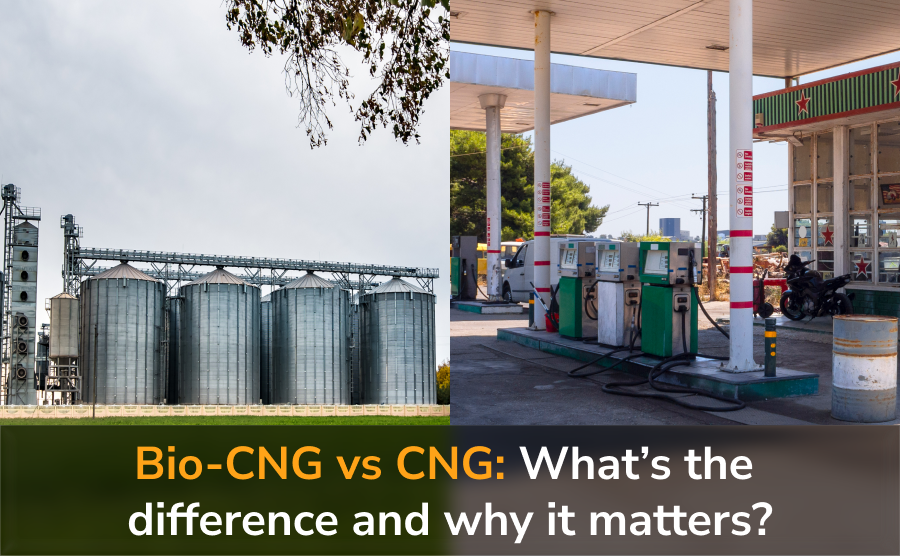
Bio-CNG vs CNG: What’s the Difference and Why It Matters
Introduction
With the growing focus on clean energy in India, many people are trying to understand the difference between Bio CNG and CNG. The expansion of Bio CNG plants, government support for renewable gas, and the rising use of natural gas in transport have all brought this comparison into everyday discussions. This has led to an important question: Bio CNG vs CNG, what sets them apart, and why does it matter?
Both fuels may appear similar because they are used in vehicles, industries, and commercial applications, but their sources, environmental impact, and long-term benefits are very different. Understanding Bio CNG vs CNG helps consumers and businesses make informed decisions about cost, sustainability, and future energy needs.
This blog explains both fuels in simple words so you can clearly see how they differ and why Bio CNG is becoming a strong part of India’s clean energy future.
Let us begin by understanding traditional CNG.
What Is CNG? Understanding Traditional Natural Gas
CNG, or Compressed Natural Gas, is made from natural gas that comes from deep underground. This gas mainly contains methane and is collected through gas wells, then cleaned to remove impurities. After processing, it is compressed and stored in high-pressure cylinders or supplied to homes and businesses through city gas pipelines.
In India, CNG is already a common fuel for daily travel. It is used in auto rickshaws, CNG cars, buses, public transport fleets, and many commercial vehicles. People prefer CNG because it produces fewer emissions, offers better mileage, and is more affordable than petrol or diesel.
CNG is still a fossil fuel and not renewable, but it remains a cleaner option compared to most conventional fuels. This is why it continues to play an important role in India’s transport system.
What Is Bio-CNG? How It Is Produced from Biomass
Bio CNG, or Biological Compressed Natural Gas, is a renewable form of CNG produced from organic waste, also known as biomass. Unlike traditional CNG that comes from fossil reserves, Bio CNG is created using materials such as agricultural residue, animal dung, food waste, municipal waste, sugarcane press mud, and even sewage or wastewater.
The production process begins with anaerobic digestion, where microorganisms break down the organic waste in an oxygen-free environment. This generates biogas, which is then purified to remove carbon dioxide, hydrogen sulfide, and excess moisture. The remaining methane is compressed to create Bio CNG, a cleaner and sustainable alternative to conventional CNG.
One of the biggest advantages of Bio CNG is its renewable nature. India produces large amounts of agricultural and organic waste every day, ensuring a steady supply of raw material. This makes Bio CNG a key contributor to India’s growing clean fuel ecosystem and reduces dependence on imported energy.
Key Differences Between Bio-CNG and CNG
Understanding the difference between Bio CNG and CNG becomes easier when we break it down into simple factors. Both fuels may look similar because they are methane-rich and used for vehicles and industries, but their origins, environmental impact, and long-term benefits are very different. Here is a clear breakdown.
1. Source
The biggest difference between Bio CNG and CNG lies in where they come from. CNG is extracted from underground fossil reserves and processed for use. Bio CNG is produced from organic waste like agricultural residue, food waste, animal dung, and municipal waste. This makes Bio CNG completely renewable.
2. Environmental impact
CNG is cleaner than petrol and diesel, but still emits carbon because it comes from fossil fuels. Bio CNG reduces methane release from waste, cuts down overall carbon emissions, and supports better waste management, making it more environmentally friendly.
3. Production process
CNG requires extraction, processing, and long-distance transportation through pipelines. Bio CNG is created through anaerobic digestion of biomass followed by purification in local biogas plants, allowing production closer to where the waste is generated.
4. Availability
The supply of CNG depends on natural gas reserves and pipeline coverage. Bio CNG, however, can be produced wherever biomass is available, including rural and semi-urban regions with abundant organic waste.
5. Emissions
Bio CNG produces fewer emissions than regular CNG, giving it an advantage in reducing air pollution.
6. Circular economy impact
Bio CNG turns waste into energy, supports recycling, and creates local jobs, strengthening India’s circular economy.
These differences explain why Bio CNG is becoming a key fuel for cleaner, sustainable growth across multiple sectors.
Cost Comparison: Bio-CNG vs CNG in India
Cost is an important factor for both personal and commercial use, which is why many people search for the Bio CNG price in India. The price difference between Bio CNG and CNG depends on factors like location, plant capacity, and supply availability.
In general:
- At the consumer level, Bio CNG and CNG prices are often comparable.
- In certain regions, Bio CNG may be slightly cheaper because it is produced locally, reducing transportation costs.
- For industries and fleet operators, long-term savings increase when Bio CNG is purchased through direct supply agreements.
- Using Bio CNG also lowers dependence on imported fossil fuels, supporting domestic energy production and economic stability.
If you are considering these fuels for vehicles or industrial use, it is important to check local prices and availability, as costs evolve with the expansion of new Bio CNG plants.
Applications: Vehicle Fuel, Industry, and Agriculture
Both CNG and Bio CNG are versatile fuels, but Bio CNG offers unique advantages in several applications.
Vehicles
Bio CNG can be used in a wide range of vehicles, including CNG cars, auto rickshaws, buses, and commercial fleets. Since Bio CNG has a methane content similar to traditional CNG, no engine modifications are needed. This makes it a seamless and convenient alternative for vehicles, allowing operators to switch fuels without altering engine performance or efficiency.
Industries
Bio CNG is also suitable for industries that require heat or steam, such as food processing, ceramic manufacturing, glass production, and textile factories. Using Bio CNG helps these industries reduce emissions, lower energy costs, and comply with environmental regulations. Its clean-burning properties make it an effective solution for companies aiming to meet sustainability goals while maintaining operational efficiency.
Agriculture
In agriculture, Bio CNG supports rural development by serving as a clean fuel for farm machinery and producing digestate, a by-product used as organic fertilizer.
For both vehicles and industrial applications, Bio CNG provides reliable performance while promoting sustainability and supporting a circular economy.
Why Bio-CNG Matters for India’s Renewable Energy Goals
India is focusing on increasing clean energy adoption, and Bio CNG plays a key role in this transition. It converts agricultural and municipal waste into renewable gas that can replace traditional CNG and LPG in many applications.
Bio CNG supports national priorities such as reducing dependence on imported fuel, managing waste efficiently, lowering methane emissions, promoting rural employment, and encouraging sustainable energy systems.
With India’s growing need for renewable gas, Bio CNG is an important solution for cleaner energy, contributing directly to long-term sustainability and the country’s renewable energy goals.
Growth Potential of Bio-CNG Plants in India
India has significant growth potential for Bio CNG because of its vast supply of agricultural residue, food waste, and organic biomass. With strong demand for clean fuel and renewable gas, Bio CNG plants in India are expected to expand rapidly.
Key factors driving this growth include the large volume of agricultural waste generated each year, rising demand for clean vehicle fuel, government support for renewable energy, increasing industrial need for low-carbon fuel, and opportunities for rural entrepreneurship.
As more Bio CNG plants develop across agricultural regions, India will build a stronger and more reliable renewable gas network.
Challenges in Bio-CNG Production and Distribution
While Bio CNG offers strong environmental and economic benefits, there are several practical challenges that must be resolved to support large-scale adoption across India.
Common challenges include:
- High initial investment required for building Bio CNG plants
- Need for a reliable and continuous supply of biomass
- Technical expertise needed for operating biogas purification systems
- Limited pipeline networks for renewable gas distribution
- Transportation hurdles for moving compressed Bio CNG cylinders
- Low market awareness among consumers, industries, and fleet operators
Addressing these challenges will make it easier for India to expand Bio CNG production and distribution, strengthening the country’s renewable gas ecosystem.
Government Support and Policy Push for Bio-CNG
The Indian government is strongly promoting Bio CNG through renewable energy and waste management initiatives. These policies motivate private companies, farmers, and startups to set up Bio CNG plants across the country.
Key areas of support include:
- Subsidies for establishing Bio CNG plants
- Assured offtake for Bio CNG and organic fertiliser by-products
- Priority status in national renewable energy programs
- Incentives for adopting clean vehicle fuels
- Collaborative models between the public and private sectors
This policy push is accelerating the Bio CNG ecosystem and encouraging financial institutions to invest in new renewable gas projects.
Conclusion
Bio CNG and CNG may look similar, but their origins and environmental impact set them apart. Bio CNG is renewable, cleaner, and part of a sustainable cycle that turns waste into energy. Traditional CNG remains an important fuel, but Bio CNG brings the added advantage of supporting India’s climate goals and reducing waste.
With increasing demand for renewable gas, better technology, and strong government support, Bio CNG will play a major role in India’s clean energy future. Whether used in vehicles, factories, or agriculture, Bio CNG has the potential to replace a significant part of fossil-based gas consumption and help create a healthier environment for everyone.