
Blog
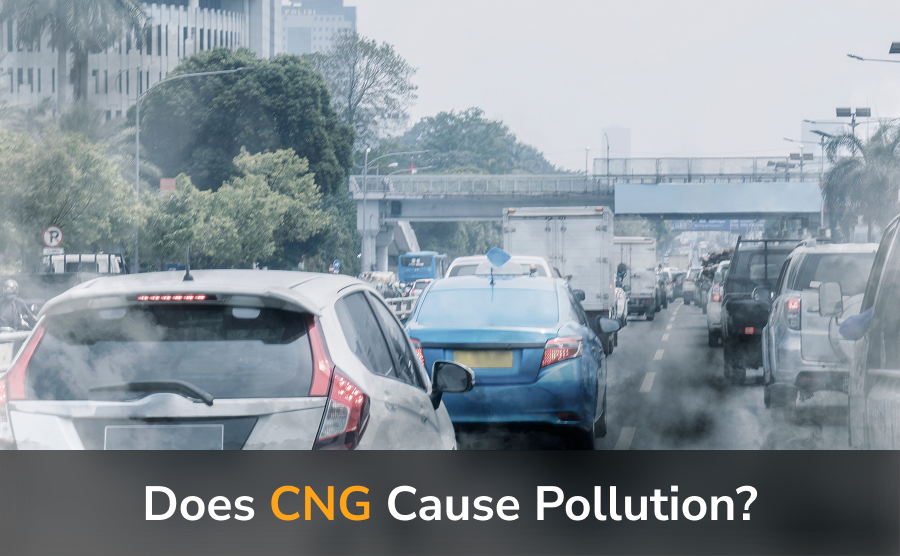
Does CNG Cause Pollution?
Introduction
If you are thinking of switching to CNG or already using it, one question naturally comes to mind: Does CNG cause pollution? You may hear people say that CNG is clean, but then you see an auto or taxi on the road releasing smoke, and you start doubting everything. It gets confusing because you just want to do the right thing for your vehicle, your pocket, and the environment.
This blog is written to clear that confusion in the simplest possible way. No complicated science, no heavy words. Only a warm, honest explanation that helps you understand how CNG actually affects the air around us. By the end of this guide, you will know exactly whether CNG causes pollution and whether it is the right choice for you.
Let us start with the basics.
What Is CNG and Why Is It Considered a Cleaner Fuel
CNG, or Compressed Natural Gas, is a fuel made from natural gas. It mainly contains methane, which burns cleaner than petrol and diesel. When you use CNG in a vehicle, the combustion process becomes more controlled and produces fewer harmful gases. This is one of the biggest reasons why cities across India encourage the use of CNG, especially for daily travel.
To understand it in easier words, imagine three types of kitchens. One uses coal, one uses kerosene, and one uses a gas stove. All three will cook food, but the gas stove will always be the cleanest and most efficient. CNG is similar to that gas stove. It is not perfect, but it is the cleanest option compared to other fuels.
People choose CNG for many reasons. It helps cut down monthly travel expenses, keeps the engine cooler, and reduces harmful emissions. Many families, cab drivers, and daily commuters across India rely on CNG because it provides a balance between savings and eco-friendly travel. It is also one of the fuels supported in India’s clean energy movement, which focuses on reducing long-term air pollution.
So, now that we know what CNG is, let us talk about the real doubt people have.
CNG Emissions vs Petrol and Diesel: Which Pollutes More
To understand which one pollutes more among CNG, petrol, and diesel, we have to look at emissions. Every fuel releases gases when burnt. The difference lies in the type and amount of these gases. Here is a simple breakdown of how CNG compares to petrol and diesel.
What CNG emits
CNG burns more cleanly than traditional fuels because methane combusts in a controlled and efficient way. This makes the exhaust much lighter and reduces the number of harmful gases released into the air. You will rarely see visible smoke from a CNG vehicle, and the emissions stay much lower in comparison.
- Very low carbon monoxide
- Very low nitrogen oxides
- Almost zero particulate matter
- Lower carbon dioxide
What petrol emits
Petrol burns more cleanly than diesel, but it still produces a noticeable amount of gases that impact air quality. Even though petrol vehicles do not create visible smoke, the pollutants they release mix with the surrounding air and add to long-term environmental concerns.
- Moderate carbon monoxide
- Moderate nitrogen oxides
- Higher carbon dioxide
What diesel emits
Diesel releases the highest level of pollution among the commonly used fuels. The combustion process produces dense particulate matter and strong fumes that stay in the air for a long time. This is why diesel vehicles are often linked with black smoke and a heavy exhaust smell.
- High particulate matter
- High nitrogen oxides
- Black smoke
- Strong exhaust smell
From this, the answer becomes clearer. CNG still releases emissions, but the level is significantly lower. Petrol and diesel, especially diesel, pollute the air much more. CNG has no soot or black smoke and does not produce heavy particles that stay in the air and cause respiratory issues.
So, in pure comparison, CNG pollutes the least among commonly used fuels.
How CNG Helps Reduce Air Pollution in Real Life
The benefits of CNG are not only seen in studies but also in daily life. If you live in a busy city, you already know how air quality drops during peak traffic hours. CNG helps reduce that impact in several ways.
1. Cleaner engine combustion
CNG mixes well with air and burns more completely inside the engine. This reduces unburnt fuel and lowers the amount of harmful pollutants released through the exhaust. Cleaner combustion also keeps the engine smoother and improves overall efficiency.
2. Less particulate matter
Diesel releases tiny soot particles that remain in the air for hours and cause breathing issues. CNG combustion does not produce these particles, which helps keep the air clearer and reduces the risk of smog and lung-related problems in busy city areas.
3. Lower greenhouse gases
CNG generates less carbon dioxide compared to petrol and diesel. While CO2 does not affect breathing immediately, it contributes to long-term climate change. Using CNG helps reduce your carbon footprint and supports cleaner, more sustainable travel.
Real examples:
- Autos running on CNG do not release black smoke.
- Taxi fleets in many cities shifted to CNG to reduce daily pollution.
- Buses in cities like Delhi were shifted to CNG to control smog levels.
These changes made a noticeable difference in air quality.
If you also want cleaner and safer fuel for your vehicle, consider checking the nearest IOAGPL CNG stations to get reliable and high-quality refueling.
Why Some CNG Vehicles Cause Pollution
Even though CNG is cleaner, you may still see some CNG vehicles releasing smoke or producing a strange smell. This does not happen because of the fuel. It happens because of the condition of the vehicle or the kit.
Here are the common reasons:
1. Poor maintenance
If the engine is not serviced on time, even CNG can burn inefficiently, which leads to visible emissions.
2. Faulty or outdated CNG kit
Old or unapproved kits do not regulate the gas flow properly. This causes incomplete combustion.
3. Gas leakage smell
CNG itself has no smell. The smell comes from a chemical added for safety. If you smell gas, it means a leakage from pipes or joints, not pollution from the exhaust.
4. Incorrect tuning
CNG tuning ensures the right mixture of air and gas. If the tuning is wrong, the engine will struggle and release pollutants.
5. Very old vehicles
Older engines were not designed for CNG originally. When converted, they sometimes produce more emissions due to age.
So, if a CNG vehicle pollutes, it is almost always the condition of the vehicle and not the fuel itself. If maintained properly, CNG remains the cleanest option on the road.
How to Reduce Pollution Even More With CNG
Keeping your CNG vehicle clean and low on emissions is easier than most people think. With a few simple habits, you can reduce pollution, improve mileage, and keep your CNG engine running smoothly for years. These steps also help you get the most environmental benefit from using CNG, which is already one of the cleanest fuels available.
- Maintain proper CNG tuning at regular intervals so the combustion stays efficient and emissions stay low.
- Use certified CNG filling stations to avoid impurities that affect engine health and increase pollution.
- Upgrade outdated CNG kits if they are old, unsafe, or locally fitted to ensure cleaner performance.
- Service the engine on time, including oil changes, air filter cleaning, and spark plug checks.
- Check for CNG leakages by inspecting pipes, joints, and valves whenever you notice a smell.
These small steps help reduce CNG pollution and keep your vehicle safe. For reliable refueling, choose authorized IOAGPL CNG stations.
Conclusion
So, does CNG cause pollution? The simplest and most honest answer is this.
CNG does cause some pollution because every fuel does, but it pollutes far less than petrol and diesel.
It is cleaner, safer, and much better for both the environment and your daily driving expenses.
By choosing CNG, you are already making a healthier choice for yourself and for everyone who breathes the same air. With proper maintenance and responsible usage, CNG becomes the most eco-friendly option for regular travel in India.
If you want reliable information, safer refueling, or clarity about CNG adoption, visit IOAGPL for trusted support and access to authorized CNG stations.