Blog
How to convert LPG gas stove to PNG gas stove?
Introduction
If you recently got a PNG gas connection at home or are planning to switch from LPG cylinders to PNG, one of the first questions that comes to mind is very simple: How do I convert my LPG gas stove to a PNG gas stove?
Many people wonder whether their old LPG stove will work with PNG, whether they need a new one, or if the conversion process is safe to do at home. It is a very common doubt, and countless households ask the same questions while moving from LPG to PNG.
In this blog, you will find the easiest explanation of LPG to PNG conversion, the steps involved, the safety checks, and what to do after your stove has been converted. By the end, you will know exactly how to convert your LPG gas stove to a PNG gas stove safely and confidently.
Let us begin with the basics so everything feels clear.
What Is the Difference Between LPG and PNG Connections
Before you convert your LPG stove to PNG, it helps to understand the basic difference between the two. LPG, which comes in cylinders, is made of propane and butane. It is stored under high pressure in a metal cylinder and released through a regulator into your stove. PNG, which stands for Piped Natural Gas, is supplied to your home directly through a pipeline network. PNG mainly contains methane and flows at a much lower pressure than LPG.
Because of these differences in pressure, flow, and composition, an LPG stove cannot be connected to PNG without converting it. The nozzle and gas inlet in an LPG stove are designed for higher pressure, while PNG requires a different sized nozzle to regulate the lower pressure of pipeline gas. This is why the conversion process is important and why so many households search for “LPG vs PNG” and “how to convert LPG gas stove to PNG gas stove” before switching.
People choose PNG because it is safer, more convenient, and eliminates the need to handle heavy cylinders every month. PNG is continuous, clean, and also cost-effective in the long run. But for PNG to work smoothly, the stove must be properly converted so the flame stays steady and safe.
Is It Possible to Convert Your LPG Stove to PNG Safely
The answer is yes. It is completely possible to convert an LPG stove to a PNG stove. In fact, most modern LPG gas stoves are designed with dual compatibility so they can work with both LPG and PNG once the correct nozzle is installed. However, the important thing to understand is that it must be done by a trained and authorised technician. Many people look up “can LPG stove run on PNG” and get confused by different answers. The truth is that the stove can run on PNG, but only after the right conversion is done.
The safety of the conversion depends on using the correct parts, such as the PNG nozzle, PNG regulator, compatible pipes, and proper sealing. A do-it-yourself method is never recommended, because the wrong nozzle or incorrect pressure alignment can cause irregular flames, leakage, and safety risks. Most gas companies, including IOAGPL, strongly advise using certified technicians for any LPG to PNG conversion.
So yes, the conversion is simple, but only when done the right way.
What You Need Before Converting an LPG Gas Stove to PNG
Before starting the LPG to PNG stove conversion process, there are a few things you should check and keep ready. These steps make sure that the conversion is smooth, safe, and fully compatible with your PNG gas connection.
Here is what you should have:
- A stove that is compatible with PNG after changing the nozzle
- An approved PNG gas regulator
- A PNG inlet point installed in your kitchen
- Gas pipes that meet PNG safety standards
- Access to an authorised PNG technician
If you are unsure about stove compatibility, you can share the model number with your technician. Some older stoves cannot be converted, and in such cases, buying a PNG-ready stove is safer.
Step-by-Step Process to Convert an LPG Stove to PNG
The conversion process is very simple and usually takes less than 30 minutes when performed by a trained professional. The steps below will help you understand how the technician carries out the LPG to PNG stove conversion process from start to finish.
1. Inspection of existing stove
The technician checks whether your LPG stove is safe to convert. They inspect the burners, valves, and fittings to make sure all parts are in good condition.
2. Changing the LPG nozzle to the PNG nozzle
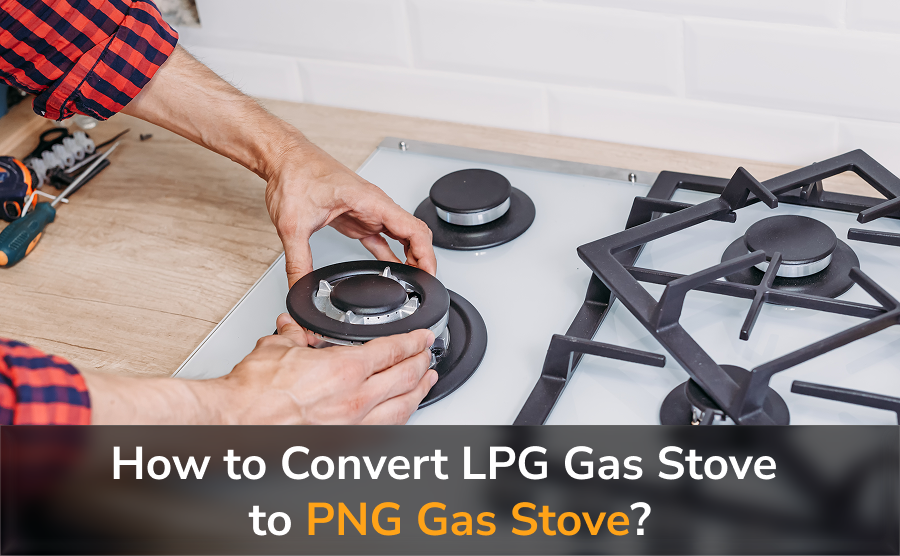
This is the most important step. PNG flows at a lower pressure than LPG, so the nozzle opening has to be changed. The technician replaces the LPG nozzle with a PNG-compatible nozzle, which ensures a stable flame.
3. Adjusting the gas pressure
The technician connects the stove to the PNG line using a proper PNG regulator. The regulator ensures the right flow of gas so the flame does not become too high or too low.
4. Reconnecting the stove with gas-safe PNG pipes
PNG uses different types of pipes compared to cylinder gas. The technician installs the correct pipes and seals all joints securely.
5. Checking for leakages
A leak test is done using a soap solution or a gas detector. This ensures your PNG connection is completely safe.
6. Flame testing
The technician lights the stove and checks the quality of the flame. The flame should be blue, steady, and uniform. If the flame flickers or turns yellow, adjustments are made.
7. Final safety check
All joints, connections, and knobs are tested. The technician only leaves after confirming everything is safe.
This process ensures your stove works perfectly on PNG without any risk.
What to Check After Your Stove Has Been Converted to PNG
Once your LPG stove is converted to PNG, there are a few things you need to keep an eye on to make sure everything works smoothly.
- Check the flame color: The flame should always be blue. A yellow or orange flame means improper combustion and needs adjustment.
- Monitor gas pressure: If the flame is too low, the pressure might need a quick check. PNG systems sometimes require minor tuning after the first day.
- Inspect connections regularly: Make sure all pipes, valves, and joints remain tight. If you ever notice a gas smell, turn off the valve immediately and contact your gas provider.
- Use only certified PNG accessories: Avoid cheap pipes or regulators available in the market. PNG needs specific fittings designed for lower pressure.
- Schedule maintenance: A quick check every few months keeps the system safe and efficient.
For the best experience, make sure your PNG connection uses authorised pipelines and fittings so your home stays safe and the gas flow remains stable.
Conclusion
Switching from LPG to PNG is a great decision for convenience, cost saving, and long-term safety. But the conversion must always be done correctly, using the proper nozzle, pressure adjustments, and certified fittings. With PNG, you no longer have to worry about cylinder refills, delivery delays, or storage space. The supply stays continuous, and the risk of running out of gas is eliminated.
So, how do you convert an LPG gas stove to a PNG gas stove safely? The answer is simple. Use the right parts and get the conversion done by an authorised technician. When done properly, your stove will work smoothly with pipeline gas, and you will enjoy a cleaner and more efficient cooking experience at home.